
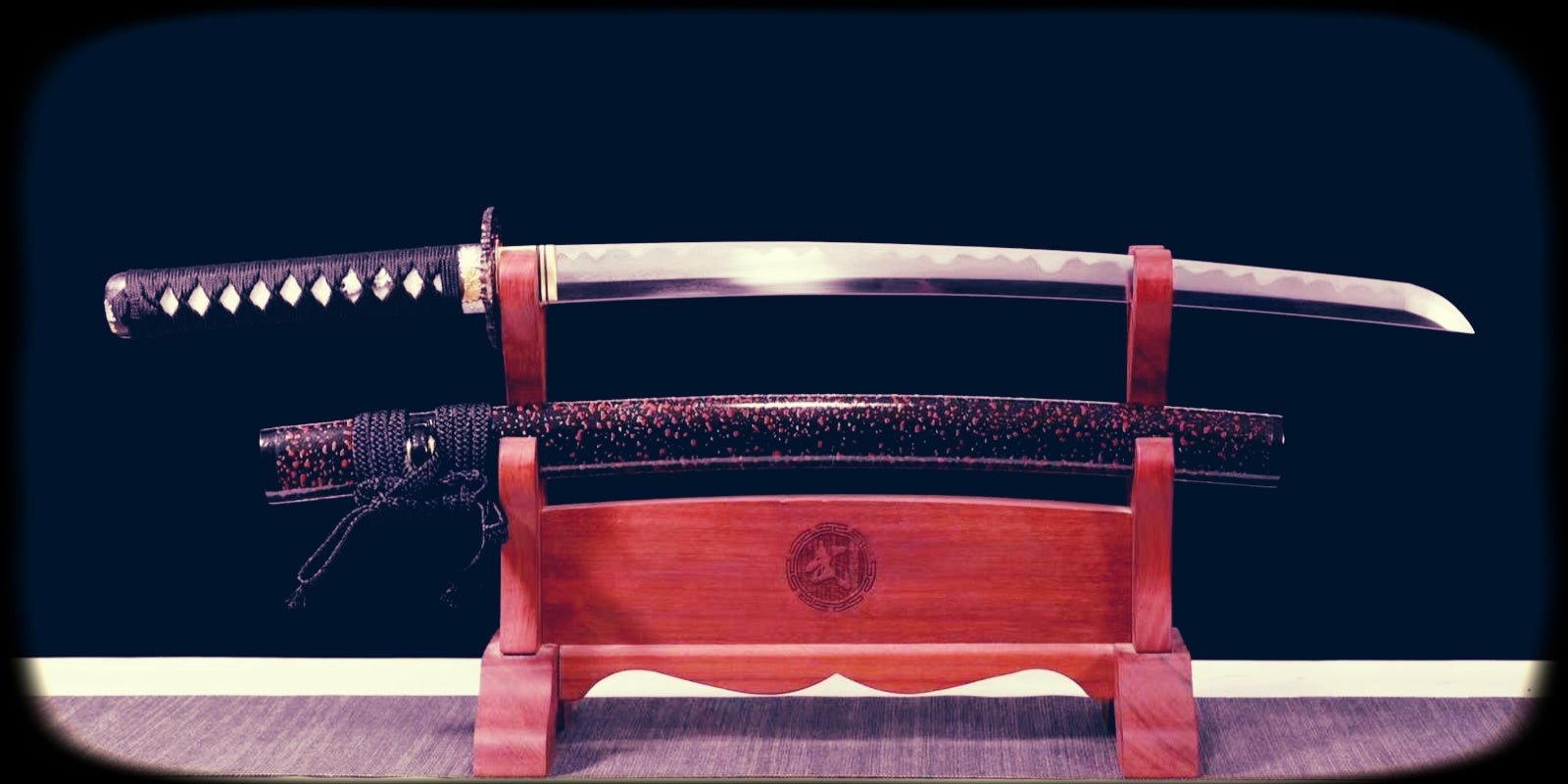
Katana Saya Materials: Pros, Cons, and Buying Guide
For a traditional Japanese sword, the saya (scabbard) is far more than a simple sheath — it’s the blade’s first line of defense and a showcase of the craftsman’s skill. The right choice of materials ensures not only long-term protection but also enhances the sword’s beauty and value. Below is a breakdown of common saya materials, their strengths and weaknesses, and tips for making an informed purchase.
1. Wood – The Lightweight, Traditional Foundation
Historically, saya have been crafted from lightweight woods like magnolia (ho-no-ki) or white oak. These woods are naturally moisture-resistant, stable against warping, and gentle on the blade’s finish. A saya is typically carved from two matched halves, precisely shaped to the blade, then joined and sealed.
Pros: Light in weight, resists moisture, protects the edge, less prone to splitting.
Cons: Softer than synthetic materials, less impact-resistant, and uncoated wood can absorb moisture over time.
2. Lacquer – Durable Protection with Artistic Flair
A traditional saya often features a natural lacquer (urushi) coating, which may be polished to a mirror finish or textured for a tactile effect. This not only adds a waterproof layer but also elevates the saya’s visual appeal.
Pros: Waterproof, scratch-resistant, visually striking, and highly collectible.
Cons: Time-consuming to apply and costly; lacquer can chip under impact; repairs require skilled work.
3. Water Buffalo Horn – Reinforcing Critical Points
Key areas of the saya — the koiguchi (mouth), kojiri (end cap), and kurikata (cord knob) — are often reinforced with water buffalo horn. This material is smooth, tough, and resilient, preventing cracks in high-stress areas and lending a refined touch.
Pros: Excellent durability, smooth blade entry, abrasion resistance, traditional elegance.
Cons: Expensive; can crack if over-dried; low-end swords may substitute plastic, which wears faster.
4. Samegawa (Ray Skin) – Luxury and Texture
Premium saya may be wrapped in ray skin (samegawa), prized for its distinct pebbled texture and resilience. Often lacquer-sealed, it offers both a unique appearance and practical benefits.
Pros: Visually distinctive, waterproof, hard-wearing, enhances grip and collector appeal.
Cons: Very costly, labor-intensive to apply, requires protective sealing to prevent wear.
5. Modern Alternatives – Practical but Less Traditional
Contemporary saya sometimes incorporate synthetic materials like carbon fiber or lightweight alloys to increase durability and reduce weight. While functional, they lack the traditional charm sought by purist collectors.
Pros: Extremely durable, low maintenance, lightweight.
Cons: Not historically authentic; less desirable for antique-style or traditional collections.
Buying Tips for Collectors
-
Choose the Right Combination: For maximum longevity and authenticity, look for magnolia wood with natural lacquer and water buffalo horn fittings.
-
Check the Craftsmanship: The lacquer should have an even finish, horn fittings should be tightly set, and the interior should be smooth to prevent blade scratches.
-
Watch for Imitations: Plastic horn or synthetic ray skin significantly lowers durability and value.
-
Match to Your Purpose: For serious collecting or preservation, opt for traditional materials; for frequent training, a practical, durable saya might be more suitable.
Final Word
A saya is more than just a protective cover — it’s a critical part of the katana’s function and a testament to the swordsmith’s precision. By understanding its materials and construction, you can choose a saya that not only safeguards your blade but also stands as a work of art in its own right.