
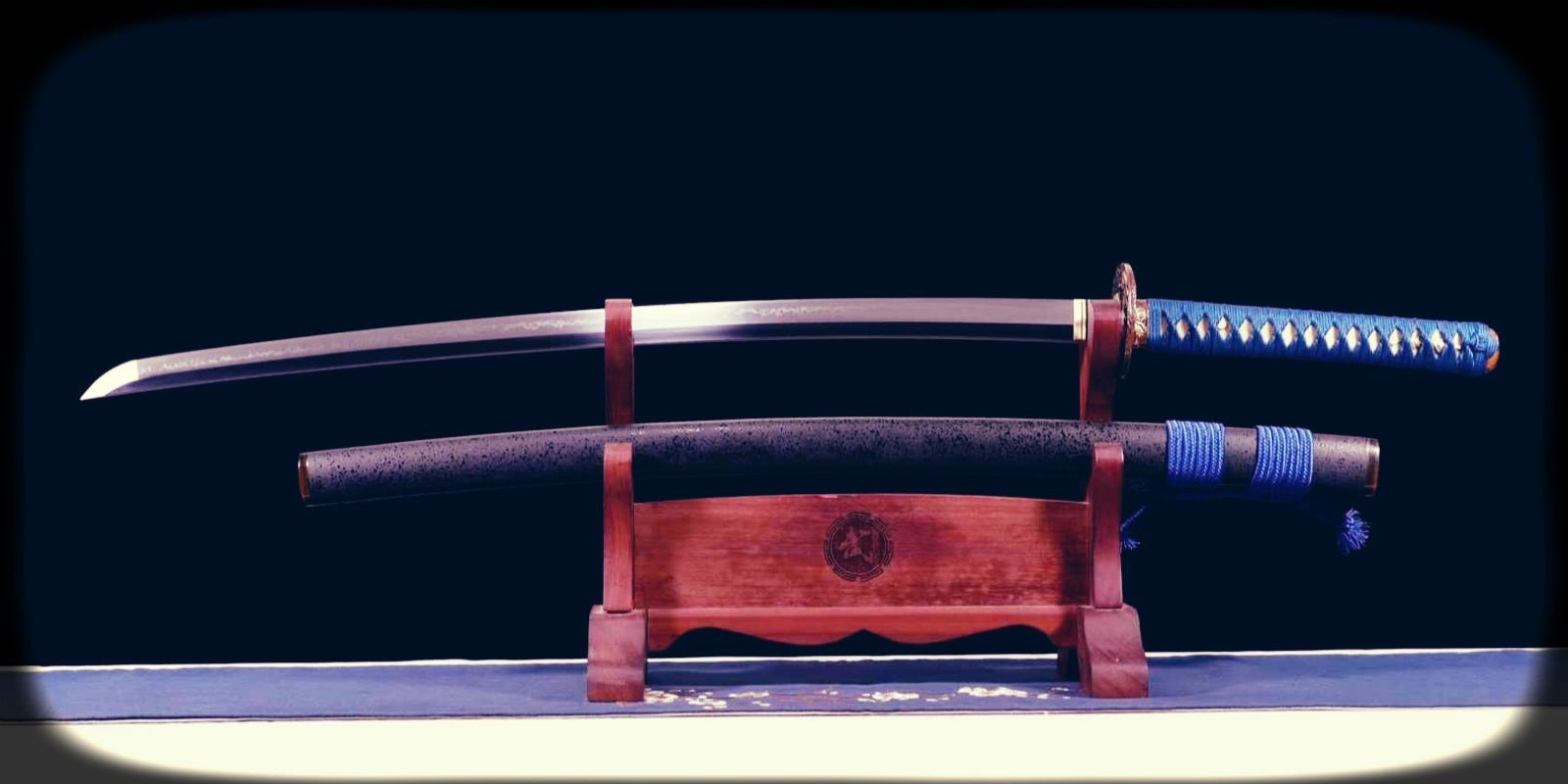
1. What Is the Kissaki?
The Kissaki is the distinctive tip of the katana, beginning at the Yokote line and extending to the very point of the blade. It’s not just the sharp end of the sword—it also includes the curved geometry leading to the tip. The Kissaki plays a key role in both cutting performance and stabbing precision while adding elegance and balance to the sword’s overall profile.
2. Common Types of Kissaki
Kissaki come in various styles, each with unique features and practical benefits:
-
Ko-Kissaki (Small Tip): Short and sharp, designed for fast, precise thrusting.
-
Chu-Kissaki (Medium Tip): The most common type, offering balanced performance and a clean look.
-
O-Kissaki (Large Tip): Longer and more visually dominant, enhancing slicing power and giving the blade a commanding presence.
Other notable variations include Ikubi-Kissaki, with a short, wide, robust shape, and Kamasu-Kissaki, characterized by a straight, pointed design resembling a fish’s mouth.
3. How Kissaki Styles Evolved
Throughout history, the shape and length of the Kissaki evolved to match the needs of the times:
-
Early swords featured Ko-Kissaki, favoring quick movements and precision.
-
The Chu-Kissaki became popular for its versatility in both cutting and thrusting.
-
O-Kissaki gained favor in later periods, providing extended reach and greater cutting force for more aggressive swordsmanship styles.
4. Craftsmanship: Why Polishing Kissaki Is an Art
Polishing the Kissaki is one of the most challenging aspects of sword finishing. Achieving a clean, crisp Yokote line, a smooth curvature known as Fukura, and a visible continuation of the hamon line called the Bōshi, requires exceptional skill. A well-crafted Kissaki reflects the mastery of the swordsmith and the precision of the polisher—often taking as much time to perfect as the rest of the blade combined.
5. Functionality: Why the Tip Matters
Beyond aesthetics, the Kissaki directly affects the sword’s performance:
-
Short Kissaki offers better control and pinpoint accuracy for thrusting techniques.
-
Long Kissaki increases the cutting surface, providing more power in slashing movements.
-
Specialized shapes like Ikubi and Kamasu balance stability and penetration, making them ideal for practical combat scenarios.
6. The Kissaki as a Mark of Craftsmanship
For collectors and enthusiasts, the Kissaki reveals a sword’s true quality:
-
A sharp, clearly defined Yokote line and a symmetrical tip demonstrate high-level polishing work.
-
A clean, flowing Bōshi adds to the blade’s visual appeal and authenticity.
-
A well-executed Kissaki combines beauty, performance, and craftsmanship in a single focal point.
7. How to Judge a Quality Kissaki
When assessing a katana, the Kissaki deserves careful attention:
-
Is the Yokote line straight and sharp?
-
Does the Kissaki’s shape match the blade’s overall proportions?
-
Be cautious of over-polished Kissaki, where the Bōshi appears faint or the tip seems too narrow—this can lower the blade’s value.
Summary: What Makes a Great Kissaki?
A great Kissaki enhances both the performance and the artistry of a katana. Whether you value functionality, beauty, or collectability, paying close attention to the sword’s tip reveals much about its overall quality and the craftsmanship behind it.