Safe Choice: Why Beginners Don’t Need to Start With a Live Blade
Starting sword training is a thrilling endeavor. The image of a sharp, polished blade slicing through the air is undeniably captivating — especially for newcomers who believe a live blade is the mark of a “serious” practitioner. But here’s the truth: diving into training with a sharpened sword isn’t just unnecessary — it can also be a mistake.
Whether you're training solo at home or building foundational skills for martial arts, choosing the right training tool can make all the difference. In this guide, we'll explore why starting with a live blade isn’t the best option, what safer alternatives are available, and how to transition confidently when you're ready.
The Myth: A Sharp Blade Means Serious Training
It’s easy to assume that a real sword must be sharp — that dull blades are for play and sharp blades are for professionals. This idea often stems from movies, flashy demonstrations, or collecting culture.
But in actual practice, sharpness doesn’t equal effectiveness. What matters most — especially in solo training — is movement quality, consistency, and safety. A live blade doesn’t help you develop those skills; in fact, it can get in the way.
Why Live Blades Can Hold You Back
Let’s break down a few reasons why beginners should steer clear of sharp blades at the start.
1. High Risk of Injury
Live blades are unforgiving. A moment of distraction or poor control can lead to serious injury. If you’re practicing alone, you have no instructor to correct errors and no one to assist if something goes wrong.
2. Fear Limits Performance
When you’re holding a sharp blade, fear naturally kicks in — and for good reason. That fear often causes stiffness, shortened movements, and hesitations that inhibit learning.
3. Bad Habits Can Form Quickly
To protect themselves, beginners often grip too hard or lock their joints — both of which lead to long-term technique issues. These habits are much easier to prevent than to fix later.
Safer Alternatives for Solo Practice
Thankfully, there are excellent tools designed to help you develop proper form, coordination, and control — without the dangers of a live edge.
1. Bokken (Wooden Swords)
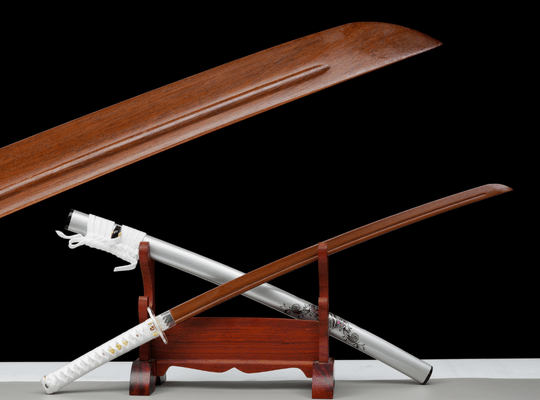
A bokken is a wooden practice sword modeled after the size and shape of a steel blade. Typically made of oak, hickory, or other durable woods, bokken are widely used by martial artists around the world.
Why it works:
-
Lightweight but solid enough to train grip and posture
-
Safer for repeated solo drills
-
Ideal for flow, angles, and full-body coordination
-
Budget-friendly and easy to find
Tip: Avoid overly cheap models — they can splinter or break easily. If you’re training indoors, consider a shorter or lighter version.
2. Iaito (Blunt Practice Swords)
Iaito are unsharpened metal swords, designed specifically for practice. They replicate the look and feel of a real blade without the risk.
Why it works:
-
Realistic weight and handling
-
Allows safe draw and resheathing practice
-
Great for refining formal kata and blade handling
Tip: Make sure you’re buying a true training-grade iaito, not a decorative replica. Look for full-tang construction and quality fittings.
3. Synthetic Practice Swords
These are made from high-grade polymers or flexible plastics. While they may not look traditional, they’re incredibly durable and perfect for light contact or movement drills.
Why it works:
-
Extremely tough — won’t crack under pressure
-
Lightweight and safe for partner or flow training
-
Easier on joints and muscles for longer sessions
Tip: These work best as a supplement, not a full replacement for bokken or iaito.
Why Safe Tools Build Better Skills
Choosing a safer training tool doesn’t mean you’re “playing it safe” — it means you’re training smarter. Here’s why:
1. Repetition Without Worry
With a safer sword, you can repeat movements more often, more confidently. The more you practice with good form, the faster you improve.
2. Better Focus on Technique
When you’re not worried about getting cut, you can pay attention to alignment, breathing, and balance — the fundamentals that carry over to any blade.
3. Less Risk = More Time Training
Fewer injuries mean more consistency. You’ll be able to train more frequently, with less recovery time, which adds up over the weeks and months.
4. Confidence That Grows With You
Safe tools help build trust in your own body. That confidence carries over when you eventually move on to a live blade.
How to Choose the Right Tool for You
Here are three key factors to help you decide which training sword fits your needs:
1. Your Training Space
Tight on room? A short bokken or light synthetic sword gives you freedom to move without risking damage to your surroundings (or yourself).
2. Your Physical Condition
If you’re just getting back into shape, opt for a lighter sword. There’s no need to push heavy training tools until you’ve built foundational strength and flexibility.
3. Your Goals
Are you training for coordination, fitness, or martial arts progression? If you plan to eventually use a live blade, an iaito can help you bridge the gap. If you’re more focused on movement and safety, bokken or synthetic options might be best.
Ready for a Live Blade? Here's How to Know
You’ve practiced regularly, built solid technique, and feel ready to step up. So what now?
Signs You’re Ready:
-
6–12 months of consistent solo practice
-
Ability to perform basic forms smoothly and safely
-
Experience with draw and sheathing mechanics
-
Comfort with your current training tool and a desire for more challenge
What to Expect With Your First Live Blade
It’ll feel different — heavier, sharper, and more mentally demanding. You might find yourself moving slower or more cautiously at first, and that’s okay. Respect for the blade is part of the learning curve.
Safety First
-
Always inspect your sword before use
-
Clear your training area — no distractions or obstacles
-
Start slow and controlled
-
Never train tired, stressed, or unfocused
-
Gloves or guards can help during early draw practice
Choosing a Good First Blade
Don’t buy the cheapest thing online. Look for:
-
A reputable seller
-
Full-tang blade (meaning the metal runs through the handle)
-
Balanced weight — not too heavy or front-loaded
-
Secure fittings and a grip that feels right
-
Moderate sharpness — you don’t need a razor edge to begin
Final Thoughts: Skill Comes Before Steel
There’s no glory in rushing. A sharp sword may feel exciting at first, but it’s a tool that requires serious responsibility. Training with a wooden, blunt, or synthetic sword helps you develop the real skills that matter: awareness, control, and flow.
If you’re training solo, your best investment isn’t a flashy blade — it’s a training partner that helps you grow. And right now, that partner is likely made of wood, alloy, or polymer.
Train smart. Train safe. Let the sharpness come later — your skill will be sharper by then.