
A Practical Guide to Kashira Matching for Katana Enthusiasts
When people talk about what makes a samurai sword special, the conversation almost always starts with the blade – the curve, the hamon, the mirror polish.
But anyone who’s spent time around real swords knows another truth:
A katana only feels “right” when the small fittings are doing their job – especially the handle cap, the kashira.
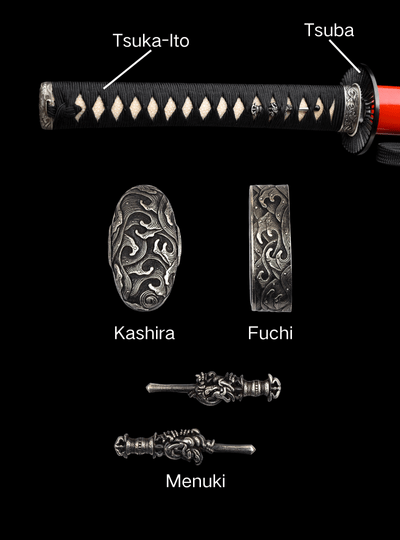
The kashira is the metal cap at the end of the handle (tsuka). It’s small and often overlooked, but it has a big influence on comfort, balance, safety, and the overall look of the sword. Get it wrong and even a good blade can feel cheap or awkward. Get it right and suddenly the whole sword “comes together” in your hands.
This guide is for sword enthusiasts, collectors, and martial artists who want to understand the essence of kashira matching – how it works, how it shapes a sword’s character, and how to choose the right one.
What Exactly Is the Kashira?
On a katana, the handle is a layered structure:
-
A wooden core (tsuka)
-
Covered with ray skin (samegawa)
-
Wrapped in handle cord (tsuka-ito)
-
Finished at the top with a fuchi (collar)
-
Closed at the bottom with a kashira (handle cap)
The kashira sits at the very end of the handle, opposite the blade.
It works together with the fuchi to clamp the handle materials in place and form the “frame” your hands actually grip.
You can think of it as:
-
the end stop that keeps everything from sliding off the handle
-
a small counterweight that helps balance the sword
-
a visual signature that completes the sword’s personality
Structure & Function – Why This Little Cap Matters
1. Locking the Handle Together
A katana handle isn’t just a stick with some cord wrapped around it. It’s a tensioned system of wood, ray skin, and braiding.
The kashira:
-
Slides over the end of the wooden core
-
Traps the ends of the handle wrap (tsuka-ito) underneath or through it
-
Works with the fuchi to keep the wrap under constant pressure
When the kashira is properly fitted:
-
the wrap stays tight
-
the handle feels solid and secure
-
nothing rattles or shifts when you move or cut
If it’s poorly fitted or loose:
-
the wrap can creep, twist, or loosen over time
-
the end of the handle can feel “hollow” or unstable
-
in extreme cases, the sword can feel unsafe to swing
So although it looks decorative, the kashira is a structural component, not just an ornament.
2. Grip, Comfort, and Control
Now think about how you actually hold a katana:
-
The bottom hand (usually the left hand for right-handed practitioners) anchors near the kashira.
-
The little finger and ring finger often wrap right around that end section.
A good kashira design will:
-
have a smooth, rounded profile that sits comfortably in the palm
-
transition neatly into the tsuka-ito, with no sharp edges digging into your hand
-
provide a subtle reference point, so your grip lands in the same place every time
That last point is especially important for martial artists:
-
In iai or kenjutsu, you want your hands to find the correct position by feel, without looking down.
-
A well-shaped kashira helps you “index” your grip automatically.
Collectors and casual users notice it too:
pick up two similar katanas with different kashira, and one will almost always feel more natural. That’s the handle cap doing its work.
3. Balance and Weight Distribution
The kashira doesn’t weigh much, but its position at the extreme end of the handle means:
-
even a small change in weight alters how the sword pivots in your hand
-
a heavier kashira can bring the point of balance slightly closer to the grip
-
a lighter one can make the sword feel a little more “blade-forward” and cut-oriented
In practice:
-
Cutting-focused swords often favour a slightly lighter kashira so the blade does more of the work.
-
Control-focused or indoor practice swords may benefit from a slightly heavier or sturdier kashira to stabilise the handle.
You don’t need to obsess over every gram, but don’t be surprised if the sword feels noticeably different after a kashira swap.
4. Durability and Safety
The kashira also serves as protection for:
-
the exposed end of the wooden core, shielding it from impacts and moisture
-
the end knots of the wrap, which it covers and locks in place
A solid metal cap:
-
reduces the risk of the wood splitting under stress
-
acts as a small shock absorber if the handle is knocked or dropped
Some close-range sword techniques even use pommel strikes, driving the kashira into a target as a blunt impact surface. That’s only viable if the cap is strong and firmly secured.
In short:
a loose or flimsy kashira isn’t just ugly – it’s a safety concern.
Design & Style – How the Kashira Shapes a Sword’s Character
Once the structural job is done, the kashira also has an artistic job: defining the look and personality of the sword.
It’s a tiny canvas, but craftsmen have historically packed a surprising amount of style into that small surface.
1. From Plain Workhorse to Mini Sculpture
Kashira designs typically fall into a few broad categories:
-
Plain, workmanlike pieces
-
smooth iron or dark metal
-
maybe a simple edge line or light texture
-
project a “no-nonsense, ready-for-work” character
-
-
Moderately decorated pieces
-
small engraved motifs (leaves, waves, simple symbols)
-
subtle file work or textures for both grip and visual interest
-
-
Highly ornate pieces
-
carved figures, flowers, animals, or landscapes
-
multi-metal inlay (gold, silver, copper)
-
layered textures and deep relief, almost like a miniature sculpture
-
Plain kashira suit swords that are meant to look practical and martial.
Ornate kashira push the sword towards art object and jewellery territory.
Neither is “better”; it’s about matching the kashira to the role you want the sword to play.
2. Common Motifs You’ll See
Some of the most common themes on kashira include:
-
Family crests (mon)
Bold, simplified symbols – often floral or geometric – used historically to signal identity and status. -
Nature themes
-
Flowers: plum, cherry, chrysanthemum, peony
-
Plants: bamboo, grasses, vines
-
Animals: carp, birds, horses, insects, mythical creatures
These motifs bring a sense of movement and life and often suggest qualities like resilience, elegance, or power.
-
-
Geometric patterns
-
basket-weave and rope-like textures
-
hexagonal “tortoiseshell” patterns
-
cross-hatching and repeating lines
These add rhythm to the design and often improve grip at the same time.
-
-
Abstract textures
Hammered, stippled, or finely punched surfaces that catch the light in subtle ways.
Alongside the tsuba, fuchi, and menuki, the kashira helps fix the sword’s overall “personality”:
-
calm and refined
-
bold and aggressive
-
simple and utilitarian
3. Style Across Eras – From Rough Iron to Refined Alloys
Without turning this into a history lecture, it’s useful to understand one broad pattern:
-
In earlier, more war-like periods, kashira were generally:
-
simpler
-
thicker and more robust
-
made primarily from iron with minimal decoration
-
-
In later, more peaceful periods, fittings evolved into:
-
more decorative and art-focused pieces
-
soft metals and special alloys with rich patinas
-
fine carving, inlay, and highly detailed scenes
-
For modern buyers:
-
If you want a sword that feels like a working tool, plainer iron or simple brass kashira are a natural fit.
-
If you want a display or collector piece, a more ornate kashira with richer materials and detail is appropriate.
You don’t need to recreate a specific era, but it’s wise to keep the overall character consistent. A hyper-ornate handle cap on a deliberately rugged, battlefield-style blade will usually look out of place.
4. Matching Kashira with Fuchi, Tsuba, and Menuki
Katana fittings are meant to work together as a coherent set. The kashira shouldn’t look like it was added as an afterthought.
A few practical matching rules:
-
Treat the fuchi and kashira as a pair
Traditionally they were made together, using the same metal, finish, and motif.
For example: both in dark patinated copper, both with gold dragonflies. -
Let the tsuba set the tone
The guard and kashira don’t need identical designs, but they should feel related:-
similar level of detail
-
similar colours and finishes
-
linked motifs (waves on the tsuba, carp or boats on the kashira, for instance)
-
-
Coordinate with the menuki and wrap colour
Gold menuki on a black wrap pairs beautifully with a black kashira that has just a few gold highlights.
If the tsuba and menuki are very understated, a wildly flashy kashira can feel unbalanced.
When these elements work together, the sword looks like a single, intentional design, not a mix of random parts.
Buying & Collecting – Choosing the Right Kashira
Whether you’re buying a complete katana or sourcing fittings for a custom build, the kashira deserves careful attention.
1. Materials & Finishes
You’ll most often come across kashira made from:
-
Iron / steel
-
Strong, durable, slightly heavier
-
Excellent for training and cutting swords
-
Usually finished in dark browns or blacks
-
Require basic rust care (a light oil from time to time)
-
-
Copper and brass
-
Traditional and easy to work
-
Copper: warm reddish tones, often darkened with patina
-
Brass: bright, yellow-gold appearance, fairly hard
-
A good balance of practicality and aesthetics
-
-
Traditional copper alloys (on higher-end pieces)
-
Copper–gold mixes that patinate to a rich black
-
Copper–silver mixes that produce soft greys
-
Favoured for artistic fittings with fine carving and inlay
-
Typically more expensive and found on collector-grade swords
-
-
Modern alloys and horn
-
Some entry-level or training swords use zinc-based alloys or stainless steel
-
Horn or synthetic materials are occasionally used for specific styles
-
Functional enough, but usually lower in artistic value
-
For everyday training and cutting, iron or brass kashira are hard to beat.
For serious collecting or a showpiece, traditional alloys with controlled patina and inlay offer far more depth and character.
2. How to Spot Good Craftsmanship
When you examine a kashira (on a sword or as a loose fitting), pay attention to:
-
Sharp, clean detail
-
Lines and edges should be crisp, not blurred
-
Leaves, scales, feathers, and textures should be clearly defined
-
Cheap cast fittings tend to look “soft” and vague
-
-
Neat inlay and edges
-
Gold or silver inlay should sit flush with the surface
-
No obvious gaps, blobs of solder, or painted “cheats”
-
Edges should be smooth, with no burrs or rough spots
-
-
Even finish or patina
-
Dark finishes should look deliberate, not patchy
-
High points can be a little brighter from handling – that’s normal
-
Flaking, peeling, or very uneven colouring is a warning sign
-
-
Solid construction
-
The kashira shouldn’t feel flimsy or paper-thin
-
A gentle tap should give a reassuring metallic feel, not a tinny rattle
-
On a mounted sword, it shouldn’t wobble or twist under light pressure
-
A quality kashira should look and feel like a small, well-made piece of metalwork, even on a purely functional sword.
3. Matching to Your Purpose
Before you choose a kashira, ask yourself: What is this sword actually for?
-
Dojo training and cutting (iaido, kenjutsu, tameshigiri)
-
Prioritise strength and fit over decoration.
-
Iron or brass kashira with simple, robust forms are ideal.
-
Avoid thin, fragile openwork that can bend or crack.
-
-
Display and collection
-
You can afford to lean into artistry and detail.
-
Traditional alloys, elaborate carving, and inlay add visual richness.
-
Make sure the kashira’s quality is in line with the blade and the rest of the fittings.
-
-
Mixed use (train a little, display a lot)
-
Aim for a middle ground:
-
structurally sound
-
visually appealing, but not so delicate that you’re afraid to handle it
-
-
For many enthusiasts, it makes more sense to own fewer swords of higher quality than a large number of compromise pieces – and the fittings, including the kashira, are a big part of that quality.
The Small Part That Completes the Whole
It’s easy to dismiss the kashira as “just the end cap”.
But once you start paying attention, you realise it:
-
anchors the entire handle structure
-
influences how the sword sits and moves in your hands
-
helps set the tone for the sword’s personality and style
A well-chosen kashira doesn’t shout for attention, but you’ll feel its effect every time you pick up the sword. The grip will feel more secure, the balance more natural, and the look more unified from guard to pommel.
Next time you’re browsing katanas or handling one in person, try this:
-
Ignore the blade for a moment.
-
Look only at the handle, especially the kashira.
-
Ask yourself:
-
Does this cap really belong on this sword?
-
Does it match the story the rest of the fittings are telling?
-
Would the sword feel different if I changed only the kashira?
-
If you find yourself answering “yes”, you’ve just discovered how important that tiny piece of metal really is.
On a well-made katana, the blade may be the soul –
but the kashira is the final touch that lets that soul sit perfectly in your hands.