
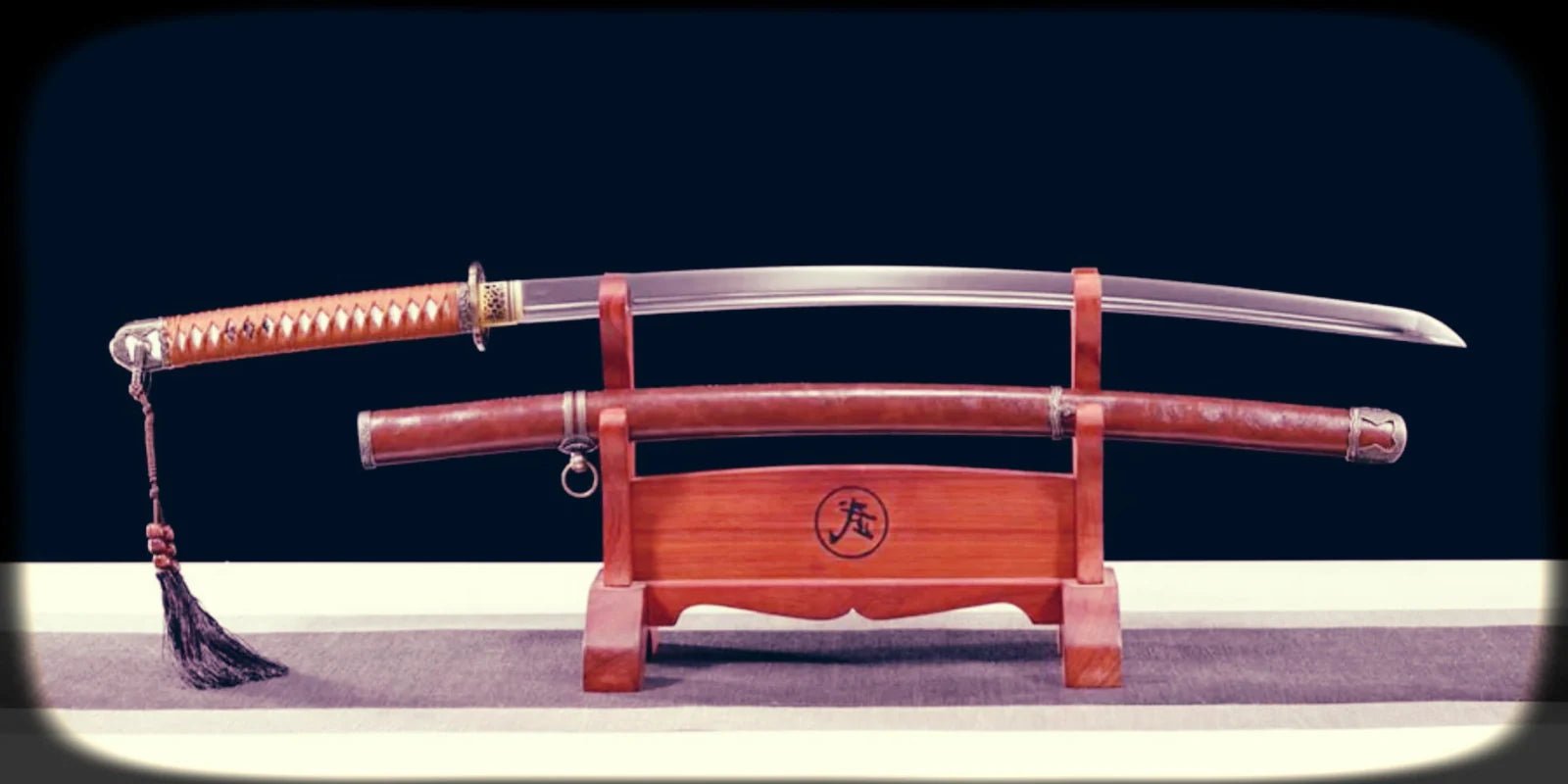
Is Spring Steel Better Than 1095 for Beginners? A Practical Guide for First-Time Katana Buyers
Introduction: The Question Every Beginner Runs Into
When you start shopping for your first katana-style sword, one question comes up again and again:
Is spring steel better than 1095?
It sounds like a simple comparison, but the honest answer is not a straight “yes” or “no.”
Spring steel and 1095 high carbon steel are both popular blade materials in modern katana-style swords. Both can be excellent when they are made properly. Both can also be disappointing if the heat treatment, blade geometry, or overall construction is poor.
So here is the practical answer:
For most complete beginners, spring steel is usually easier to live with than 1095. But that does not mean spring steel is automatically better.
Spring steel is often chosen for toughness, shock resistance, and forgiveness. 1095 is often chosen for higher hardness potential, strong edge performance, and a crisp cutting feel when properly heat treated.
In plain English, spring steel is usually the more beginner-friendly option. 1095 is usually the more edge-focused option.
That difference matters because a beginner does not need the most extreme steel on day one. A beginner needs a blade that is easy to understand, practical to maintain, safe to own, and forgiving enough while they learn the basics.
Let’s break it down without the confusing jargon.
First, What Does “Better” Actually Mean?
Before we compare spring steel and 1095, we need to define what “better” means.
A lot of beginners assume that “better” means harder or sharper. That makes sense at first, but sword performance is not that simple.
For a katana-style sword, “better” could mean:
-
better edge retention;
-
better toughness;
-
better shock resistance;
-
better flexibility;
-
better beginner forgiveness;
-
better cutting feedback;
-
easier maintenance;
-
safer construction;
-
better value for a first sword.
The problem is that no single steel wins every category.
A very hard blade may hold an edge well, but it may be less forgiving under bad impact. A tougher blade may handle stress better, but it may not keep an extremely hard edge as long as a high-carbon steel.
So the real question is not:
Which steel is the best?
The better question is:
Which steel makes more sense for your first sword?
For someone who has never handled a blade before, that distinction is huge.
What Is Spring Steel?
Spring steel is not one single steel. It is a family of steels known for resilience, toughness, and the ability to handle repeated stress.
In the sword market, the most common spring steels you will see are 5160 and 9260.
5160 Spring Steel
5160 is a chromium spring steel often used in functional swords because it offers a strong balance of toughness and durability. It is not usually chosen because it looks fancy. It is chosen because it can make a practical, dependable blade when heat treated correctly.
For beginners, 5160 is often the “workhorse” option. It is straightforward, tough, and easy to understand.
It is the kind of steel that does not need to show off. It just does the job.
9260 Spring Steel
9260 is a silicon-alloy spring steel known for flexibility and shock resistance. In many sword listings, 9260 is described as springy, resilient, or forgiving.
That does not mean it is unbreakable. It does not mean you should bend test it for fun. It simply means that a properly made 9260 blade may have a better chance of recovering from reasonable stress than many harder, less flexible steels.
For beginners, that extra forgiveness can be valuable.
A 9260 blade gives you a little more breathing room while you are still learning how a sword behaves.
What Is 1095 High-Carbon Steel?
1095 is a plain high-carbon steel. The “95” roughly points to its high carbon content, which is one reason it can reach high hardness when properly heat treated.
In sword terms, 1095 is often valued for:
-
strong edge hardness;
-
good edge retention;
-
a crisp cutting feel;
-
strong sharpening potential;
-
visible hamon potential when differentially hardened.
A well-made 1095 blade can be excellent. It can cut very cleanly, take a hard edge, and appeal to buyers who care about sharper-edge performance.
But there is a trade-off.
Compared with many spring steels, 1095 is usually less forgiving. It can be more sensitive to heat treatment and more demanding in use. If the blade is too hard, used poorly, or forced into the wrong target, the edge may be more likely to chip or crack.
That does not make 1095 bad. Not at all.
It simply gives 1095 a different personality.
Hardness vs Toughness: The Trade-Off Beginners Must Understand
This is the heart of the whole comparison.
1095 usually has the advantage in hardness.
Spring steel usually has the advantage in toughness and forgiveness.
Hardness helps a blade resist edge rolling and hold sharpness. Toughness helps a blade resist cracking, breaking, and shock damage.
Many beginners think hardness is always the most important property. That is understandable. After all, a sword is supposed to cut, right?
But a sword is not just a small knife. A long blade experiences leverage, vibration, twisting force, and impact. That means toughness matters a lot.
A blade that is very hard but not tough enough may cut beautifully under perfect conditions. However, it may also punish mistakes more quickly. A tougher blade may be more forgiving when the user is still learning control, edge alignment, and target choice.
That is why spring steel often makes more sense as a first functional blade.
It is not because spring steel is better in every way. It is because beginners usually need a wider safety margin.
Why Spring Steel Is Usually Easier for Beginners
A complete beginner may not know how to judge cutting angle yet. They may not understand which targets are safe. They may not know how much force is enough. They may also still be learning how to clean, oil, and store a blade.
At that stage, a blade that forgives reasonable beginner mistakes is helpful.
Spring steel is often easier for beginners because it usually offers:
-
better shock resistance;
-
better toughness;
-
more flexibility;
-
less brittleness under stress;
-
a more practical first-sword experience;
-
a lower-drama ownership path.
Think of it this way: if you are learning to drive, you probably do not need a high-strung race car as your first vehicle. You need something stable, reliable, and forgiving while you build skill.
Spring steel plays a similar role in the sword world.
It may not be the flashiest option, but for a first sword, flashy is not always what you need.
Where 1095 Still Wins
To be fair, 1095 has real advantages.
If your priority is edge hardness, edge retention, and a crisp cutting feel, 1095 can be very attractive.
A properly heat-treated 1095 blade can take a hard edge and keep it well. This makes it appealing to buyers who want a sharper, more aggressive blade personality.
1095 is also commonly used in differentially hardened blades. That means the edge is made harder while the spine or body remains softer. This process can create a visible hamon, which many buyers find attractive.
So 1095 may be a better choice if you care about the following:
-
stronger edge retention;
-
a harder edge;
-
sharper cutting feedback;
-
visible hamon;
-
a more specialized blade feel.
The important thing is not to confuse “less forgiving” with “bad.”
1095 is not bad steel. It is just not always the easiest first steel for someone who has never handled a sword before.
Heat Treatment Can Change Everything
Here is the part many beginners miss:
The steel name gets your attention, but heat treatment decides how the blade actually performs.
Heat treatment usually involves heating, quenching, and tempering the steel. In simple terms, quenching hardens the blade, while tempering reduces brittleness and adjusts the balance between hardness and toughness.
This means two swords made from the same steel can behave very differently.
A well-heat-treated 1095 sword can outperform a poorly heat-treated spring steel sword. A well-heat-treated 5160 or 9260 sword can outperform a poorly heat-treated 1095 sword.
So when comparing spring steel and 1095, never look at the steel name alone.
Ask these questions:
-
What exact steel is used?
-
Is it 5160, 9260, or just vaguely labeled “spring steel”?
-
Is the 1095 blade properly heat treated?
-
Is the blade through hardened or differentially hardened?
-
Does the seller give a realistic hardness range?
-
Is the sword designed for display, light cutting, or controlled practice?
-
Are the fittings and handle assembly secure?
A good blade is not just steel. It is steel plus heat treatment, geometry, and construction.
Ignore that, and even a famous steel name will not save a poorly made sword.
Through-Hardened Spring Steel vs Differentially Hardened 1095
Spring steel blades are often through hardened. This means the blade is heat treated more evenly throughout the body.
A through-hardened blade usually focuses on durability, toughness, and forgiving performance. For beginners, this can be a very practical choice because it is less fussy and more predictable under reasonable use.
1095 is often seen in differentially hardened blades. In this style, the edge is harder while the spine or body is softer. This can create a harder cutting edge and a visible hamon.
Both approaches can work well. They simply serve different priorities.
Through-hardened spring steel is usually better if you want a tough, low-drama first sword.
Differentially hardened 1095 is usually better if you want a harder edge, stronger edge retention, and more visible blade character.
Neither one is automatically superior. The better choice depends on what you want from the sword.
For a complete beginner, though, the simple and forgiving nature of through-hardened spring steel often makes more sense.
Maintenance: Both Steels Need Care
Here is another important point: neither spring steel nor 1095 is stainless.
That means both can rust.
Some beginners assume 5160 is “almost stainless” because it contains chromium. That is not the right way to think about it. 5160 may contain chromium, but not enough to make it stainless steel. 9260 and 1095 also need protection from moisture, sweat, and fingerprints.
The basic care routine is simple:
-
wipe the blade after handling;
-
avoid touching the blade with bare fingers;
-
keep a thin layer of protective oil on the blade;
-
store the sword in a dry place;
-
check regularly for rust or loose fittings.
If you do not want to do any maintenance at all, neither spring steel nor 1095 is ideal.
A functional carbon or alloy steel sword needs care. That is part of ownership.
The good news is that maintenance is not difficult. It just needs to become a habit.
Is Spring Steel Safer for Cutting Practice?
A properly made spring steel katana-style sword can be suitable for controlled cutting practice, depending on blade geometry, edge condition, heat treatment, and overall construction.
But “beginner-friendly” does not mean “safe without training.”
A sharp sword is not a toy. It should not be used for random backyard experiments, hard-object cutting, or social media challenges.
For someone who has never handled a sword before, the safest first step is often not a live blade at all. A wooden trainer or blunt practice sword is usually a smarter way to learn basic handling, distance, grip, and movement.
If you eventually move to a sharp blade, use soft, controlled targets and proper supervision. Avoid metal, stone, thick wood, bone, or random objects. Bad targets can damage the blade and create serious safety risks.
Spring steel may give beginners more forgiveness, but it does not make unsafe use safe.
Good steel helps. Good judgment matters more.
Which One Should a Complete Beginner Choose?
For most complete beginners, spring steel is usually the better first choice.
Not because it is sharper. Not because it is more beautiful. Not because it is indestructible.
It is usually better for beginners because it is more forgiving.
A well-made 5160 or 9260 blade gives new owners a practical starting point. It focuses on toughness, durability, and stress resistance. Those qualities matter when you are still learning how to handle, maintain, and understand a sword.
Choose spring steel if you want:
-
a practical first sword;
-
better beginner forgiveness;
-
good toughness;
-
better shock resistance;
-
less stress about small mistakes;
-
a blade focused on durability over decoration.
Choose 1095 if you want:
-
a harder edge;
-
stronger edge retention;
-
a sharper cutting feel;
-
visible hamon potential;
-
a blade that rewards more careful handling;
-
a more edge-focused sword.
Both choices can be good. The key is matching the steel to your real use.
Beginner Buying Checklist
Before buying either spring steel or 1095, use this simple checklist.
1. Does the seller name the exact steel?
“Spring steel” alone is vague. 5160 or 9260 is more useful. 1095 should also be clearly stated.
2. Is the heat treatment explained?
Look for through hardened, differentially hardened, tempered, or hardness range information.
3. Is the sword’s intended use clear?
Display, light cutting, controlled practice, and collection are not the same thing.
4. Is the construction safe?
Check for secure handle assembly, tight fittings, and clear tang information.
5. Are the claims realistic?
Be careful with words like “unbreakable,” “ultimate,” or “battle ready” if the listing gives no real specifications.
6. Are you ready to maintain it?
Both spring steel and 1095 need wiping, oiling, and dry storage.
7. Are you actually ready for a sharp blade?
If you have never handled a sword before, start with basic training tools first.
This checklist matters more than chasing one steel name.
Common Beginner Mistakes to Avoid
The first mistake is thinking “harder means better.” Hardness helps with edge performance, but it does not replace toughness.
The second mistake is thinking spring steel cannot break. It can. It is forgiving, not magical.
The third mistake is thinking 1095 is bad because it is less forgiving. That is not true. A well-made 1095 blade can be excellent.
The fourth mistake is buying based only on appearance. A sword can look beautiful and still have poor construction.
The fifth mistake is ignoring maintenance. Any non-stainless functional blade needs care.
The sixth mistake is using a sharp sword before learning safe handling. This is the biggest one. No steel choice can fix unsafe habits.
Avoid these mistakes, and your first-sword experience will be much better.
Final Verdict: Is Spring Steel Better Than 1095?
For most complete beginners, yes — spring steel is usually the easier and more sensible first choice.
But the word “usually” matters.
Spring steel is not automatically better than 1095. It simply matches beginner needs more often. It gives more toughness, more shock resistance, and more forgiveness while the owner is still learning.
1095, on the other hand, is not a bad beginner steel. It offers stronger edge hardness and edge retention when properly heat treated. It may be a great choice for buyers who care more about cutting feel, edge performance, and visible hamon.
So the final answer is not about choosing the “best” steel.
It is about choosing the steel that fits your current skill level, your intended use, and your willingness to maintain the blade.
For a first katana-style sword, practical is not boring. Practical is smart.
A good beginner sword should help you learn, not punish every small mistake. It should give you confidence, not confusion. It should be honest about its strengths and limits.
That is why spring steel is often the better starting point.
It gives beginners what they usually need most: a tough, forgiving, understandable blade and a clear path to learn before chasing more specialized features later.