
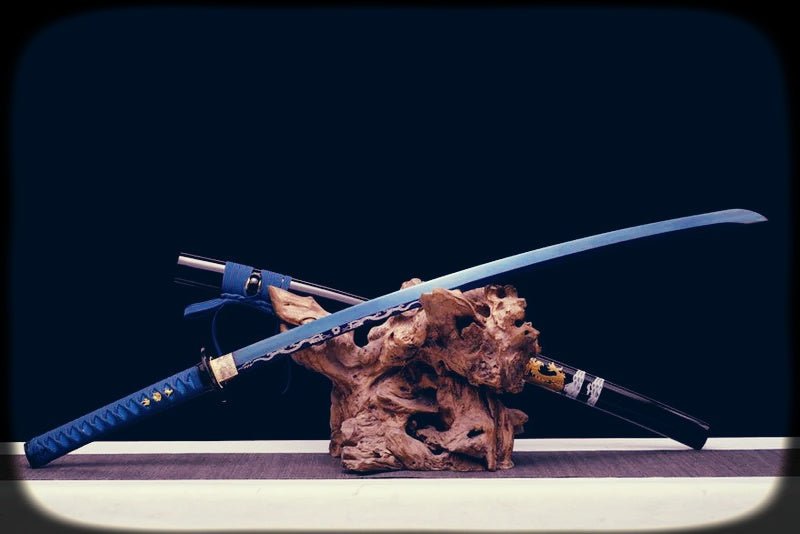
Why Spring Steel Is a Smart Choice for Beginner Katana Buyers
Introduction: Your First Sword Should Be Practical, Not Overcomplicated
When you start shopping for your first katana-style sword, the product descriptions can get confusing fast.
You will see terms like "5160 spring steel," "9260 spring steel," "1095 high carbon steel," "folded steel," "clay tempered," "through hardened," and "full tang." For a beginner, it can feel like you need a metallurgy degree just to make a decent choice.
The good news? You do not.
Before getting lost in technical labels, start with a much simpler question:
What kind of blade actually makes sense for a beginner?
For many first-time buyers, spring steel is one of the most sensible answers.
Spring steel is not the fanciest sword steel. It is not the most decorative. It is not some magic metal that can survive anything. A spring steel blade can still rust, bend, or become damaged if it is poorly made or badly used.
But when the steel is properly heat treated and the sword is safely assembled, spring steel offers exactly what many beginners need most: toughness, resilience, and a little more forgiveness.
That is why steels like 5160 and 9260 are so common in modern functional katana-style swords. They give new owners a practical starting point without forcing them to chase complicated blade features too early.
Let’s break it down in plain English.
What Is Spring Steel?
Spring steel is not one single steel. It is a family of steels known for handling stress, absorbing impact, and returning close to their original shape after bending within reasonable limits.
That is where the name comes from. These steels are commonly used in applications where a material needs to flex, resist shock, and keep working under repeated stress.
In the sword world, the most common spring steels you will see are:
5160 spring steel
A tough chromium alloy steel often used in practical, functional swords. It is known for durability and reliability when heat treated correctly.
9260 spring steel
Silicon-alloy spring steel is often praised for flexibility and resilience. In sword listings, 9260 is usually marketed as a forgiving steel that can handle bending stress better than many harder steels.
6150 / 51CrV4 spring steel
A chromium-vanadium spring steel. It is less common in beginner katana listings than 5160 or 9260, but it belongs to the same general performance family: tough, resilient, and suitable for demanding use when properly treated.
The key thing to remember is this:
Spring steel describes a performance direction, not a guaranteed level of quality.
A good seller should ideally tell you the exact steel grade, such as 5160 or 9260. If a product only says “spring steel” without giving more detail, that does not automatically mean it is bad, but it does give you less information to work with.
Why Beginners Need Forgiveness More Than Extreme Hardness
Many new buyers think a sword is good as long as it is extremely hard and sharp. That sounds logical at first, but sword performance is all about balance.
A blade has to do several jobs at once. It needs enough hardness to hold an edge. It needs enough toughness to resist cracking or breaking. It also needs enough resilience to handle vibration, impact, and small mistakes in cutting angle.
That balance matters even more for beginners.
A beginner may not have perfect edge alignment yet. They may not fully understand how much force is actually needed. They may not know which targets are safe for cutting practice. They may also still be learning how to clean, oil, and store a blade properly.
At that stage, a blade that punishes every small mistake is not ideal.
Spring steel is popular because it usually gives the user more room for error. It is often tougher and more forgiving than steels chosen mainly for maximum edge hardness. That does not mean it wins in every category. It simply means it is often easier for a beginner to live with.
A good beginner sword should not make ownership stressful. It should help the owner learn safely, understand basic maintenance, and build confidence.
That is where spring steel really shines.
Hardness, Toughness, and Flexibility: Three Terms Every Beginner Should Know
Before choosing a sword, it helps to understand three basic terms: hardness, toughness, and flexibility.
They sound similar, but they are not the same thing.
Hardness
Hardness is the steel’s resistance to denting, scratching, rolling, or deformation. In a sword, hardness helps the edge stay sharp and clean during use.
But higher hardness is not always better.
A very hard blade may hold an edge well, but it can also be less forgiving if used incorrectly. If the heat treatment is poor, or if the blade is pushed beyond its limits, a very hard edge may chip or crack more easily.
So do not buy a sword only because it has a high HRC number. Hardness matters, but it is only one part of the story.
Toughness
Toughness is the blade’s ability to absorb energy before breaking. For a long blade, toughness is extremely important because the sword experiences leverage, vibration, twisting force, and shock.
This is one of the biggest reasons spring steel is beginner-friendly. It is usually selected for resilience and impact resistance, not just edge hardness.
A tough blade gives new users more confidence because it is less likely to fail under reasonable beginner-level stress, assuming it is made correctly.
Flexibility
Flexibility is the ability of a blade to bend slightly and recover. This is the feature most people associate with spring steel, especially 9260.
But flexibility is also easy to misunderstand.
A spring steel sword is not something you should bend for fun. It is not a pry bar. It is not a tool for unsafe tests or social media stunts. Flexibility simply means the blade may have a better chance of recovering from reasonable stress when properly heat-treated.
In other words:
Flexibility is a safety margin, not a party trick.
Why 5160 Spring Steel Works Well for Beginners
5160 is one of the most common spring steels used in modern functional swords. It is often chosen because it offers a practical balance of toughness, strength, and durability.
For beginners, 5160 is easy to understand. It is the workhorse option.
It may not be the most decorative steel. It may not produce the most dramatic visual effects. But it is widely respected because it can make a strong, practical blade when treated correctly.
A 5160 spring steel katana-style sword may be a good choice if you want the following:
-
a practical first blade;
-
reliable toughness;
-
better impact resistance than many harder steels;
-
a sword focused more on function than decoration;
-
a blade that is easy to understand as a new buyer.
Think of 5160 as the dependable everyday choice. It does not need to be flashy to be useful.
For many first-time buyers, that is exactly the point.
Why 9260 Spring Steel Is Known for Forgiveness
9260 spring steel is often associated with flexibility because of its silicon content. In the sword market, 9260 is commonly described as resilient, springy, and forgiving.
For beginners, that can be helpful.
A new owner may not always move with perfect control. They may still be learning how blade angle affects cutting. A properly made 9260 blade can provide a little more forgiveness under reasonable stress.
But 9260 should not be exaggerated.
It is not unbreakable. It can still bend permanently if abused. It can still fail if the heat treatment is poor. It can still rust if neglected. A steel name alone does not make a sword safe or high quality.
The correct way to understand 9260 is this:
9260 can be a very beginner-friendly steel because it emphasizes resilience, but it still depends on proper heat treatment and safe construction.
That sentence matters because it keeps the claim honest.
Spring Steel vs 1095 High Carbon Steel
One of the most common beginner questions is, "Is spring steel better than 1095?"
The honest answer is "not always."
They are different steels with different strengths.
1095 high-carbon steel can take a hard edge and hold sharpness well when properly heat treated. It is also popular in blades where the buyer wants a more visible hamon or a harder cutting edge.
Spring steel, especially 5160 or 9260, usually focuses more on toughness, shock resistance, and beginner forgiveness.
So the better question is not “Which one is better?”
The better question is:
Which one is better for your first sword?
Choose spring steel if you want a practical, durable blade that is easier to manage as a beginner.
Choose 1095 if you care more about harder edge performance, sharper edge feel, and visual blade features such as a prominent hamon.
A well-made 1095 sword can be excellent. A well-made spring steel sword can also be excellent. The difference is that spring steel often gives first-time owners a lower-stress starting point.
That is why many beginners find it easier to live with.
Spring Steel vs Folded Steel
Folded steel sounds impressive. It looks attractive, and many beginners assume it must automatically be better.
But folded steel is not a steel grade. It is a forging method.
Spring steel tells you what type of material the blade is made from. Folded steel tells you how the steel was worked or styled.
In modern production, many steels are already clean and consistent. Folding can create a beautiful grain pattern, but it does not automatically make a sword stronger. If folding is done poorly, it can even introduce flaws.
So for a beginner, the rule is simple:
Do not pay extra for folded steel just because it sounds fancy.
If your goal is a first functional katana-style sword, a well-made spring steel blade may be more practical than a poorly made folded blade.
Visual beauty matters. But safety, heat treatment, and blade construction matter more.
Spring Steel vs Stainless Steel
Stainless steel is attractive because it resists rust better. For small knives, decorative blades, or display pieces, stainless steel can be convenient.
But for a long functional sword, stainless steel is usually not the best beginner's choice.
A long blade experiences more stress than a short knife. It deals with leverage, vibration, and impact. Many stainless steel swords on the market are built mainly for display, not controlled cutting or functional training.
Spring steel requires more care because it can rust, but it is usually more suitable for a practical long blade.
Here is the simple tradeoff:
Stainless steel: easier to maintain, often better for display.
Spring steel: needs regular care, usually better for practical sword construction.
If you only want a wall decoration, stainless steel may be enough. If you want a serious first katana-style sword, spring steel is usually the more sensible direction.
Heat Treatment Matters More Than the Steel Name
This is one of the most important points in the entire article.
The steel name may catch your eye, but heat treatment decides how the blade actually behaves.
Heat treatment usually involves heating, quenching, and tempering. In simple terms, quenching hardens the steel, while tempering reduces brittleness and adjusts the balance between hardness and toughness.
Two swords made from the same steel can perform very differently if they are heat-treated differently.
A well-treated 5160 blade can be tough and reliable. A poorly treated 5160 blade can feel disappointing. A well-treated 9260 blade can be flexible and resilient. A poorly treated 9260 blade may bend, fail, or simply perform poorly.
This is why you should not buy only based on the words “spring steel.”
A good product description should explain more than the steel name. It should tell you the exact steel grade, whether the blade is through hardened or differentially hardened, and what kind of use the sword is designed for.
If a listing only uses dramatic marketing words but gives no useful specifications, be careful.
Through-Hardened vs Differentially Hardened
Spring steel swords are often through-hardened. This means the blade is heat treated more evenly through the body of the blade. Through-hardened blades are usually known for overall toughness and durability.
For beginners, this can be a very practical choice because the blade is often more forgiving and less demanding.
Differentially hardened blades are treated so that the edge is harder while the spine or body remains softer. This can create a visible hamon and can offer strong cutting performance, but it requires good craftsmanship and more careful use.
Neither method is automatically better.
Through-hardening is often a good fit for beginners who want a simple, durable, no-drama first sword.
Differential hardening may appeal more to buyers who value a harder edge, visible hamon, and a more specialized blade character.
The important point is this:
A visible hamon is not automatic proof of quality.
A good sword still needs proper steel, correct heat treatment, safe construction, and suitable blade geometry.
Construction Matters Too
Steel and heat treatment are important, but they are not the whole story.
A sword is not just a blade. It is a complete system.
The handle, tang, fittings, and overall assembly all matter. Even a good steel blade can be unsafe if the handle is loose or the tang construction is weak.
For a beginner-friendly functional sword, look for:
-
clear steel identification;
-
proper heat treatment information;
-
secure handle construction;
-
tight fittings;
-
honest use description;
-
realistic product photos;
-
clear return or support policy.
A sword that looks beautiful but feels loose is not a good beginner sword. A simple sword with solid construction is usually a better choice than a decorative sword with vague specifications.
When you are new, reliability matters more than fancy wording.
Is Spring Steel Good for Cutting Practice?
A properly made spring steel samurai sword can be suitable for controlled cutting practice, depending on blade geometry, edge condition, heat treatment, construction, and user skill.
But beginners need to be careful with the word “functional.”
Functional does not mean you can cut random objects. It does not mean the sword is safe to swing around casually. It does not mean the blade can handle anything.
A sharp sword is not a toy.
For someone who has never handled a sword before, the better path is to start with basic handling, safe movement, grip, distance, and control. Many beginners should begin with a wooden trainer or blunt practice sword before moving to a sharp blade.
Spring steel gives you a more forgiving tool. It does not replace training.
Avoid cutting hard objects, metal, stone, thick wood, or anything unpredictable. If cutting practice is part of your plan, it should be done in a safe space with suitable targets and proper guidance.
A good blade helps. Good judgment matters more.
How to Care for a Spring Steel Sword
Spring steel is not stainless steel. It can rust.
That does not mean it is difficult to maintain. It simply means you need a basic routine.
After handling the sword, wipe the blade clean. Avoid touching the blade directly with bare fingers because fingerprints contain moisture and salts. Keep a very thin layer of protective oil on the blade. Store it in a dry environment. Check it regularly for rust spots or loose fittings.
Do not overdo the oil. A thin, even film is usually enough.
The goal is simple: keep moisture, sweat, fingerprints, and dirt away from the steel surface.
Spring steel may be tough in use, but it still needs care in storage.
A beginner who learns basic maintenance early will have a much better ownership experience.
Beginner Buying Checklist
Before buying your first spring steel katana-style sword, ask these questions:
1. What exact steel is it?
Look for 5160, 9260, 6150, 51CrV4, or another clearly named steel. “Spring steel” alone is less informative.
2. How is it heat treated?
Through-hardened and differentially hardened blades behave differently. A good seller should explain the treatment clearly.
3. What is the sword designed for?
Is it for display, light practice, controlled cutting, or collection? The intended use should be stated honestly.
4. Is the construction safe?
Check for secure handle assembly, tight fittings, and clear tang information.
5. Does the seller avoid hype?
Good product writing explains. Weak product writing only throws around words like “battle ready,” “unbreakable,” or “ultimate.”
6. Are you ready to maintain it?
Spring steel needs wiping, oiling, and dry storage. If you do not want any maintenance, a functional carbon or alloy steel sword may not be right for you.
This checklist is simple, but it can help beginners avoid a lot of bad purchases.
Who Should Choose Spring Steel?
Spring steel may be a good choice if this is your first katana-style sword and you want something practical, understandable, and forgiving.
It is especially suitable if you value:
-
toughness;
-
durability;
-
beginner-friendly handling;
-
simple ownership;
-
reasonable maintenance;
-
practical performance over decoration.
It may not be the best choice if your main goal is a strong visual hamon, folded blade pattern, or a purely decorative display piece.
That does not make spring steel better or worse. It simply means it serves a specific purpose.
For beginners, that purpose is very useful.
Spring steel gives you a blade that focuses on function first. It helps you learn what matters before you start chasing more specialized features.
Conclusion: Spring Steel Is Sensible, Not Magical
So, why is spring steel suitable for beginners?
Because it matches what many first-time buyers actually need.
A beginner usually does not need the hardest edge, the most dramatic hamon, or the most complicated blade construction. A beginner needs a sword that is tough, forgiving, easy to understand, and practical to maintain.
Spring steel offers that balance.
5160 is a dependable workhorse. 9260 is known for flexibility and resilience. 6150 / 51CrV4 can also be a strong option when the maker is transparent. But in every case, the steel must be properly heat treated and safely assembled.
Spring steel is not perfect. It is not indestructible. It still needs care. It still has limits.
But for a first katana-style sword, practical is not boring. Practicality is smart.
The best beginner sword is not the one with the loudest product title. It is the one where the steel, heat treatment, construction, and intended use all make sense together.
That is why spring steel deserves attention.
It gives new buyers a clear starting point: strong enough to trust, forgiving enough to learn with, and simple enough to understand before moving deeper into sword collecting.
For a first sword, that is exactly what you want.