
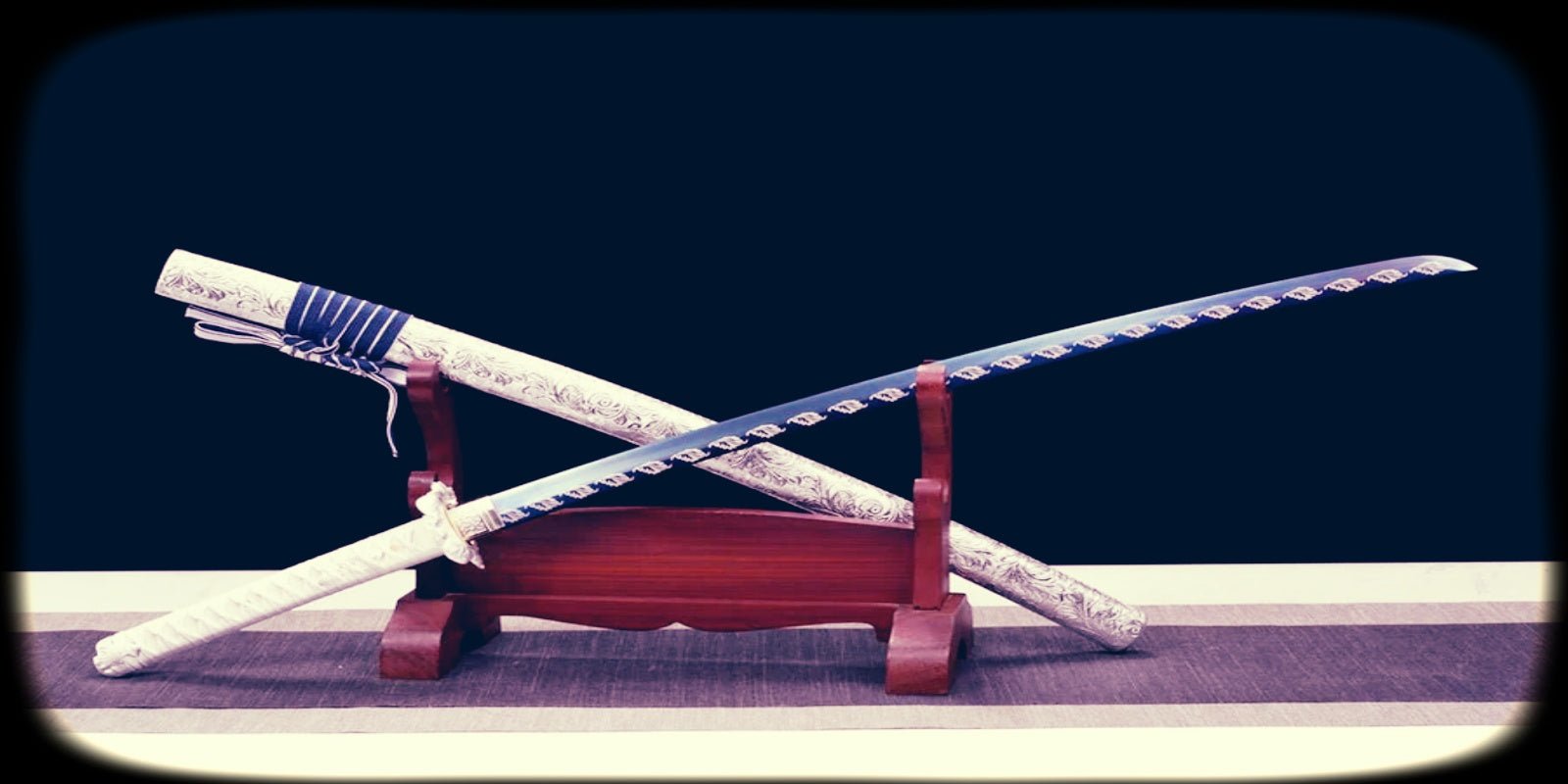
What Is a Spring Steel Samurai Sword? A Beginner’s Guide Before Buying Your First Katana
If you are just getting into katana-style swords, you have probably already seen product titles like “spring steel samurai sword,” “5160 spring steel katana,” or “9260 spring steel blade.”
At first, the phrase can sound a little odd. Does “spring steel” mean the blade is soft? Does it bend like a spring? Is it better than 1095 high carbon steel? Can you actually use it, or is it just another flashy marketing term?
Let’s break it down in plain English.
A spring steel samurai sword is usually a modern katana-style sword made from a resilient steel such as 5160 or 9260 spring steel. It is called “spring steel” not because there is a spring inside the sword, but because this family of steels is designed to handle stress, absorb shock, and return close to its original shape after bending.
For a complete beginner, here is the easiest way to think about it:
Spring steel is chosen for toughness and forgiveness, not because it is magical.
A spring steel sword can still rust. It can still bend. It can still break if abused. But when it is properly heat treated and safely assembled, it can be one of the most practical choices for someone buying their first real katana-style sword.
1. Why Sword Steel Matters More Than Most Beginners Realize
When people buy their first katana, they often look at the obvious things first: the color of the saya, the shape of the tsuba, the handle wrap, the fittings, or whether the blade has a visible hamon.
That is totally understandable. A sword should look good.
But looks are only one part of the story. The steel determines much of the blade’s working personality. It affects how the sword handles stress, how well the edge holds up, how forgiving the blade feels, and how much maintenance it needs.
A sword blade has to do several things at once. It needs to be hard enough to take a sharp edge. It needs to be tough enough to survive impact. It also needs enough resilience to deal with vibration, shock, and small mistakes in cutting angle.
That balance is not easy.
This is why “harder” does not always mean “better.”
If a blade is too soft, the edge may roll or deform. If it is too hard, it may chip or crack more easily. A good sword is not about chasing the highest hardness number. It is about finding the right balance between edge performance and durability.
That is where spring steel starts to make sense.
It may not be the flashiest steel. It may not create the most dramatic hamon. But for many beginners, it offers something more useful: a practical, tough, and forgiving blade.
2. What Does “Spring Steel” Mean in a Katana?
In the modern sword market, spring steel usually refers to alloy steels known for toughness, flexibility, and impact resistance. The most common types you will see in katana listings are 5160, 9260, and sometimes 6150 / 51CrV4.
Spring steel is not one single steel. It is a category.
That matters because a product title that only says “spring steel” does not tell you the full story. A good seller should ideally tell you the exact steel grade.
5160 Spring Steel
5160 is one of the most common steels used for functional modern swords. It contains carbon and chromium, giving it good toughness and durability when heat treated properly.
For beginners, 5160 is the “workhorse” option. It is practical, strong, and dependable. It is not usually chosen because it looks fancy. It is chosen because it can make a solid, usable blade.
9260 Spring Steel
9260 contains silicon, which helps improve spring-like behavior. In sword listings, 9260 is often described as flexible, resilient, or more forgiving under stress.
For a beginner, 9260 is easy to understand: it is often the “bounce-back” steel. When properly made, it may tolerate bending stress better than some harder steels.
But do not get carried away. A 9260 blade is not indestructible. You should never intentionally bend-test a live blade just to see what happens. That is a quick way to turn a good sword into a bad day.
6150 / 51CrV4 Spring Steel
6150, also known as 51CrV4 in some standards, is a chromium-vanadium spring steel. It is less commonly mentioned in beginner katana listings, but it belongs to the same general family of tough, stress-resistant steels.
If you see this steel in a sword listing, it can be a good sign, but the same rule applies: the steel name alone is not enough. Heat treatment and construction still matter.
3. The Three Words Every Beginner Should Know: Hardness, Toughness, and Flexibility
You do not need to become a metallurgist to buy your first sword. But you should understand three basic ideas: hardness, toughness, and flexibility.
Hardness: Can the Edge Hold Up?
Hardness is the steel’s ability to resist denting, rolling, and deformation. In a sword, hardness helps the edge stay sharp and clean during cutting.
But too much hardness can make a blade less forgiving. A very hard edge may hold sharpness well, but it can also become more prone to chipping if the blade is used poorly or hits the wrong target.
So, do not buy a sword just because it claims a high HRC rating. That number matters, but it is only part of the picture.
Toughness: Can the Blade Survive Impact?
Toughness is the steel’s ability to absorb energy without breaking. For a long blade, toughness is extremely important.
A katana-style sword is not a small knife. It has length, leverage, and momentum. During cutting, the blade experiences vibration, shock, twisting force, and impact. A tough blade has a better chance of surviving real-world stress.
This is one of the main reasons spring steel is popular.
Flexibility: Can the Blade Bend and Recover?
Flexibility is what most people think of when they hear “spring steel.” A well-made spring steel blade may bend slightly under stress and return close to true.
But here is the key point:
Flexibility is a safety margin, not a party trick.
A spring steel sword is not something to bend for fun, pry with, or abuse for social media. It is still a sharpened steel blade, and it still has limits.
4. Why Spring Steel Is Often Beginner-Friendly
A beginner does not always have perfect technique. That is normal.
Maybe your cutting angle is not consistent yet. Maybe you do not fully understand edge alignment. Maybe you are still learning how much force is actually needed. In that stage, a forgiving blade can be helpful.
Spring steel is often beginner-friendly because it usually focuses on:
- toughness instead of extreme hardness;
- shock resistance instead of brittle edge performance;
- practical use instead of decorative complexity;
- better forgiveness for controlled beginner practice;
- good value for the money.
That said, spring steel is not automatically good just because the product page says “spring steel.”
A poorly heat-treated spring steel blade can perform badly. A badly fitted handle can make even good steel unsafe. Loose fittings, poor tang construction, or weak assembly can turn a decent blade into a risky one.
A sword is a system. The steel is important, but it is only one part of the whole package.
A better way to say it is this:
Spring steel can be a great beginner choice when the blade is properly heat treated, safely assembled, and honestly sold for its intended use.
5. 5160 vs 9260: Which One Should Beginners Understand First?
Most beginners will run into 5160 and 9260 before any other spring steels. Both can be good choices, but they have slightly different personalities.
5160: The Tough, Practical Workhorse
5160 is often used because it offers a strong balance of toughness, durability, and edge performance. It is not the most glamorous steel in the room, but it gets the job done.
Think of 5160 as the reliable pickup truck of sword steels. It may not be flashy, but it is strong, practical, and built for work.
For a first katana-style sword, 5160 makes sense if you want something straightforward, durable, and easy to understand.
9260: The More Flexible Option
9260 is often chosen when flexibility and resilience are key selling points. Because of its silicon content, it can have excellent spring-like behavior when properly heat treated.
For beginners, 9260 is often described as more forgiving. It may tolerate bending stress better than some harder steels, which can be useful for users who are still learning control and proper cutting angle.
But again, do not treat 9260 like a superhero steel.
It can still be damaged. It can still take a permanent bend. It can still fail if the heat treatment is bad or the sword is abused.
The steel gives you a margin of safety. It does not give you a license to do dumb stuff.
6. Spring Steel vs 1095 High Carbon Steel
This is one of the most common questions in the katana market:
Is spring steel better than 1095?
The honest answer is: not always. They are simply built around different priorities.
1095 is a high-carbon steel. When heat treated properly, it can take a hard edge and hold sharpness well. It is also popular for blades with a visible hamon, especially when the blade is differentially hardened.
Spring steel, especially 5160 or 9260, usually puts more emphasis on toughness, shock resistance, and forgiveness.
Here is the simple comparison.
Choose spring steel if you want:
- a practical first sword;
- better resistance to shock;
- more forgiveness during beginner handling;
- a blade focused on durability;
- less concern about dramatic visual effects.
Choose 1095 if you want:
- a harder edge;
- stronger edge retention;
- a more visible hamon;
- a crisper cutting feel;
- a blade with a more traditional-style personality.
Neither is automatically better.
A well-made 1095 katana can be excellent. A well-made spring steel katana can also be excellent. The real question is not “Which steel is best?” The better question is:
Which steel makes the most sense for your first sword?
For many complete beginners, spring steel is simply easier to live with.
7. Spring Steel vs Folded Steel: Do Not Mix Up Material and Method
Folded steel sounds impressive. It looks beautiful. The grain pattern can be very attractive, and many beginners assume folded steel must be stronger or more traditional.
But here is the important part:
Folded steel is not a steel grade. It is a forging method.
Spring steel tells you what kind of material the blade is made from. Folded steel tells you how the blade was worked or styled.
In modern production, steel is already much cleaner and more consistent than older raw material sources. Folding can create beautiful visual texture, but it does not automatically make a sword stronger. If done poorly, folding can even introduce flaws.
So, for a beginner, the rule is simple:
Do not pay extra for folded steel just because it sounds fancy.
If your goal is a first functional sword, a well-made spring steel blade may be more practical than a poorly made folded blade. A beautiful pattern is nice, but it should not come at the cost of structure, heat treatment, or safety.
Looks matter. Performance matters more.
8. Spring Steel vs Stainless Steel
Stainless steel sounds like the easy option because it resists rust better. For small knives, decorative blades, or display pieces, stainless steel can be convenient.
But for a long functional sword, stainless steel is usually not the best choice.
A long blade experiences much more stress than a short knife. It has leverage, vibration, and impact force. Many stainless steel swords on the market are made mainly for display, not real use.
Spring steel requires more care because it can rust, but it is usually more suitable for a functional long blade.
Here is the basic tradeoff:
Stainless steel: easier to maintain, often better for display.
Spring steel: needs regular care, usually better for practical sword construction.
If you only want a wall hanger, stainless may be fine. If you want a serious functional katana-style sword, spring steel is usually the more sensible choice.
9. Heat Treatment: The Part You Really Should Not Ignore
Here is the big secret that many beginners miss:
The steel name is important, but heat treatment is what makes or breaks the blade.
Heat treatment usually includes heating, quenching, and tempering. In simple terms, quenching helps harden the steel, while tempering reduces brittleness and adjusts the final balance between hardness and toughness.
This is why two swords made from the same steel can perform very differently.
A well-treated 5160 blade can be tough and reliable. A poorly treated 5160 blade can be disappointing. A well-treated 9260 blade can be flexible and resilient. A badly treated 9260 blade can bend, fail, or feel underwhelming.
So when you are shopping, do not ask only, “What steel is it?”
Ask better questions:
- What exact steel grade is used?
- Is it 5160, 9260, 6150, or something else?
- Is the blade through-hardened or differentially hardened?
- Does the seller mention the hardness range?
- Is the sword made for display, light cutting, or functional practice?
- Are the fittings tight and safely assembled?
- Does the product description explain the blade clearly, or is it just throwing buzzwords at you?
Good steel needs good heat treatment. Good heat treatment needs good construction. All three have to work together.
10. Through-Hardened or Differentially Hardened?
Spring steel swords are often through-hardened. This means the blade is heat treated more evenly throughout the body of the blade. Through-hardened blades usually focus on overall toughness and durability.
A differentially hardened blade is treated so that the edge becomes harder while the spine remains softer and more shock-absorbing. This process can create a visible hamon.
For beginners, a through-hardened spring steel sword often makes sense because it focuses on forgiveness and strength. It is practical, simple, and less fussy.
Differentially hardened blades can also be excellent, especially for buyers who care about a harder edge or visible hamon. But they require good craftsmanship, and the hamon itself should not be treated as automatic proof of quality.
A hamon can be beautiful. It can also be overhyped.
What really matters is whether the whole blade is made well.
11. Is a Spring Steel Samurai Sword Good for Cutting Practice?
A properly made spring steel katana can be suitable for supervised cutting practice, depending on the blade geometry, edge condition, heat treatment, and overall construction.
But let’s be very clear: if you have never handled a sword before, safety comes first.
A sharp sword is not a toy. It is not something to swing around in the backyard, test on random objects, or use for risky videos.
Before using a live blade, beginners should learn the basics: grip, posture, distance, edge alignment, safe movement, and how to handle the sword responsibly. Many people should start with a wooden trainer, blunt practice sword, or supervised instruction before moving to a sharp blade.
Spring steel can make a sword more forgiving, but it cannot fix unsafe habits.
In other words, it gives you a better tool. It does not replace training.
12. How to Care for a Spring Steel Sword
Spring steel is not stainless steel. It can rust.
The good news is that basic care is not complicated.
After handling the sword, wipe the blade clean. Avoid touching the blade with bare fingers if possible, because fingerprints contain moisture and salts. Keep a very light protective oil film on the blade. Store the sword in a dry place. Check it regularly for rust spots, moisture, or loose fittings.
You do not need to overdo it. More oil is not always better. A thin, even layer is usually enough.
The main goal is simple: keep moisture, sweat, fingerprints, and dirt away from the steel.
A spring steel sword may be tough in use, but it still needs clean storage and regular care.
13. Who Should Choose a Spring Steel Samurai Sword?
A spring steel katana-style sword may be a good choice if you are a complete beginner and want a practical first blade.
It may suit you if:
- this is your first katana-style sword;
- you want something more functional than decorative;
- you value toughness and forgiveness;
- you may want to move into supervised cutting practice later;
- you do not need the most dramatic hamon;
- you prefer durability over fancy blade patterns;
- you want a sword that is easier to understand as a beginner.
It may not be the best choice if:
- your main goal is a strong visible hamon;
- you want the hardest possible edge;
- you mainly want folded steel grain for display;
- you only want a decorative wall piece;
- you do not want to maintain a carbon or alloy steel blade.
This is the healthiest way to shop:
Do not ask, “What is the best steel?”
Ask, “What is the best steel for what I actually want to do?”
That one shift will save you from a lot of bad buying decisions.
Conclusion: Spring Steel Is Practical, Not Magical
A spring steel samurai sword is usually a modern katana-style sword made from a resilient steel such as 5160 or 9260. Its main strengths are toughness, flexibility, and forgiveness.
For beginners, that matters.
Your first sword should not just look cool. It should make sense. It should be understandable, maintainable, and suitable for your actual level of experience.
Spring steel is not the most decorative option. It is not automatically better than 1095. It is not indestructible. It does not break the laws of physics.
But when it is properly heat treated and safely assembled, it can be one of the smartest starting points for a first functional katana-style sword.
The best beginner sword is not the one with the loudest product title or the most dramatic marketing language. It is the one where the steel, heat treatment, construction, and intended use all line up.
That is why spring steel deserves attention.
It gives new buyers a practical starting point: strong enough to trust, forgiving enough to learn with, and simple enough to understand before stepping deeper into sword collecting. For a first sword, that is not boring at all. That is exactly what you want.