
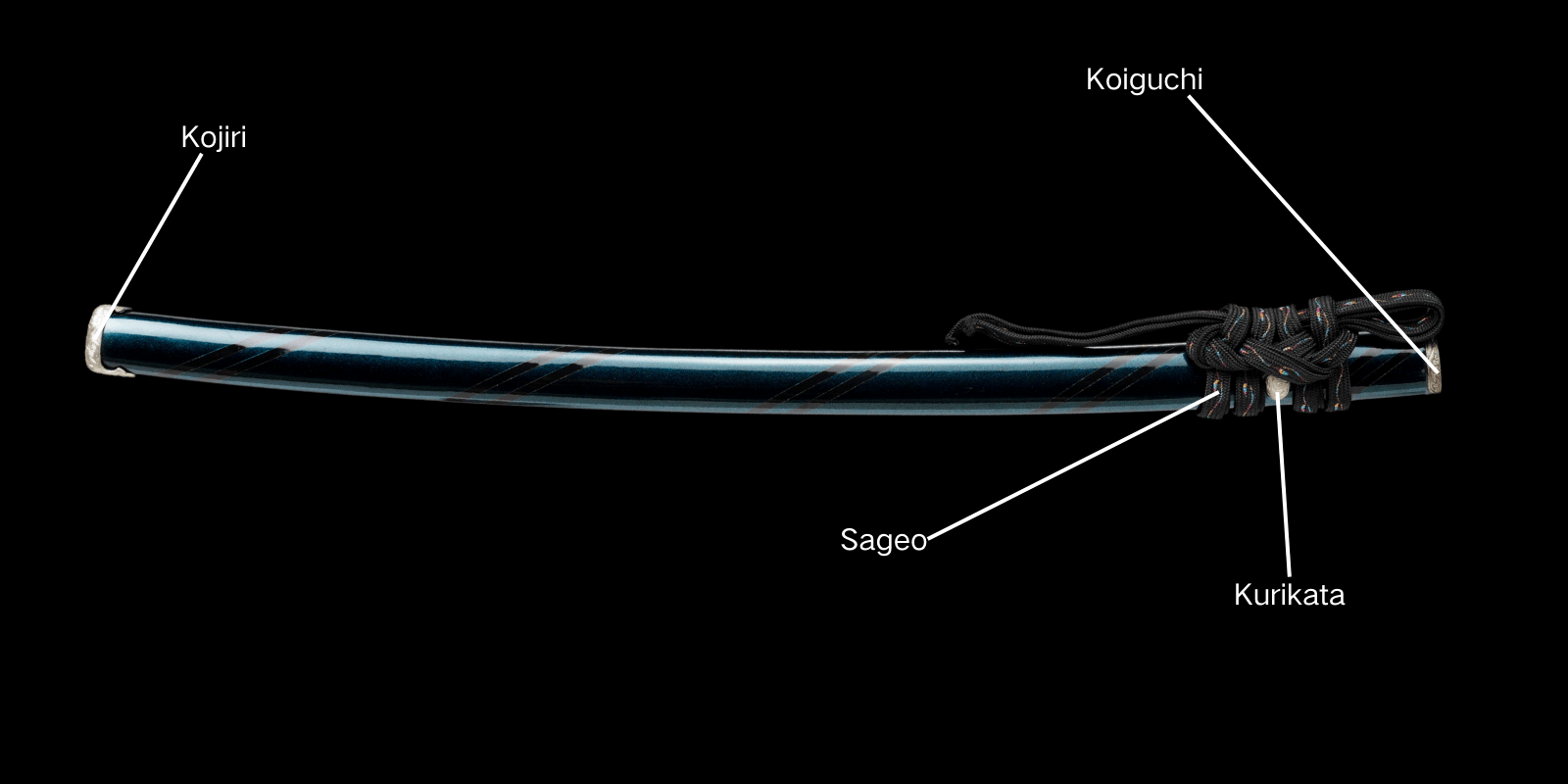
Katana Saya Anatomy: Koiguchi, Kurikata, and Kojiri Explained
When most people admire a katana, their eyes are drawn to the graceful arc of the blade or the intricate diamond pattern of the handle wrap. Yet the saya—the scabbard—quietly performs the essential job of protecting the blade, balancing the sword at the wearer’s side, and ensuring a clean, silent draw. Far from being a simple wooden case, the saya is a finely engineered system in which every component serves a purpose. Three features are especially important: Koiguchi, Kurikata, and Kojiri.
This guide takes a close look at these three parts, showing how they’re made, why they matter, and how they work together to keep a katana both functional and beautiful.

Koiguchi: The Precision Mouth
What It Is
The Koiguchi—literally “carp’s mouth”—is the opening of the saya. It’s where the blade slides in and where the habaki, the wedge-shaped metal collar at the base of the blade, locks securely.
Why It Matters
-
Firm Lock-Up: The Koiguchi grips the habaki tightly enough to hold the blade without rattling, yet releases smoothly with a thumb push.
-
Edge Protection: Its rounded, polished rim prevents the cutting edge from scraping or chipping as the sword is drawn or sheathed.
-
Environmental Shield: A snug fit helps maintain stable humidity inside the scabbard.
Craftsmanship
Artisans reinforce the Koiguchi with water-buffalo horn or another dense material set into a honoki (Japanese magnolia) core. The fit must be exact—secure but never abrasive. A well-made Koiguchi is the hallmark of a high-quality saya.
Kurikata: Anchor for the Sageo
What It Is
The Kurikata is a small knob or ring mounted on the upper side of the saya. The sageo cord threads through it to attach the scabbard to the wearer’s belt (obi).
Why It Matters
-
Secure Carry: The sageo keeps the scabbard stable whether the sword is worn edge-up for practice or displayed on a stand.
-
Draw Angle: The Kurikata’s placement affects the tilt of the saya, which in turn influences draw speed and comfort.
Craftsmanship
Typically made of horn, hardwood, or metal, the Kurikata is polished smooth to prevent the sageo from fraying and anchored firmly so it won’t loosen over time. Even small differences in its position can change how the sword hangs and draws.
Kojiri: The Protective End Cap
What It Is
At the tip of the scabbard sits the Kojiri, the end cap that finishes the saya’s shape.
Why It Matters
-
Impact Guard: It shields the wooden core when the scabbard touches the ground, preventing cracks or chips.
-
Balance Tuning: A slight weight at the end helps the sword hang evenly and feel balanced during a draw.
-
Elegant Finish: A well-fitted Kojiri gives the saya a clean, graceful termination.
Craftsmanship
Kojiri are commonly fashioned from water-buffalo horn, copper, or brass and then seamlessly blended into the lacquered wood. Their durability and precise fit contribute to the sword’s overall handling.
How They Work Together
Koiguchi, Kurikata, and Kojiri form a practical trio:
-
Koiguchi locks the blade in place and protects the edge.
-
Kurikata secures the saya to the belt and sets the ideal draw angle.
-
Kojiri guards the scabbard’s tip and fine-tunes its balance.
Together they make the scabbard more than a sheath—they turn it into a critical part of the katana’s performance.
From Workshop to Finish
Building a quality saya is a multi-stage craft:
-
Core Shaping – The saya-shi (scabbard maker) hollows honoki wood to match the blade’s profile perfectly.
-
Horn Fittings – Koiguchi and Kojiri are carved and fitted for strength and precision.
-
Kurikata Installation – The knob is positioned for optimal carry and securely pinned.
-
Lacquering – Multiple coats of urushi or modern lacquer protect the wood and create a chosen surface, from deep gloss to subtle matte.
A fraction of a millimeter off in Koiguchi fit or Kurikata placement can affect the way the sword draws and balances, which is why skilled craftsmanship is indispensable.
Care and Maintenance
Even the finest saya needs regular attention:
-
Check the Koiguchi: Seasonal humidity changes can cause wood to expand or contract, loosening or tightening the fit.
-
Inspect the Kurikata and Sageo: Replace the cord or reinforce the knob if you notice fraying or wobble.
-
Protect the Kojiri: Avoid rough surfaces and wipe it clean to prevent moisture damage.
-
Keep the Blade Clean: Always dry and lightly oil the blade before sheathing to avoid condensation inside.
These simple habits preserve both the scabbard and the sword it safeguards.
Conclusion
Small as they seem, Koiguchi, Kurikata, and Kojiri are fundamental to a katana’s function and longevity. They secure the blade, stabilize the carry, and protect the scabbard’s most vulnerable points, all while adding to the weapon’s quiet elegance.
Understanding these three components turns casual admiration into true appreciation. The katana’s reputation for harmony and balance owes as much to its finely crafted saya as to the blade itself—proof that even the smallest details can define an enduring masterpiece.