
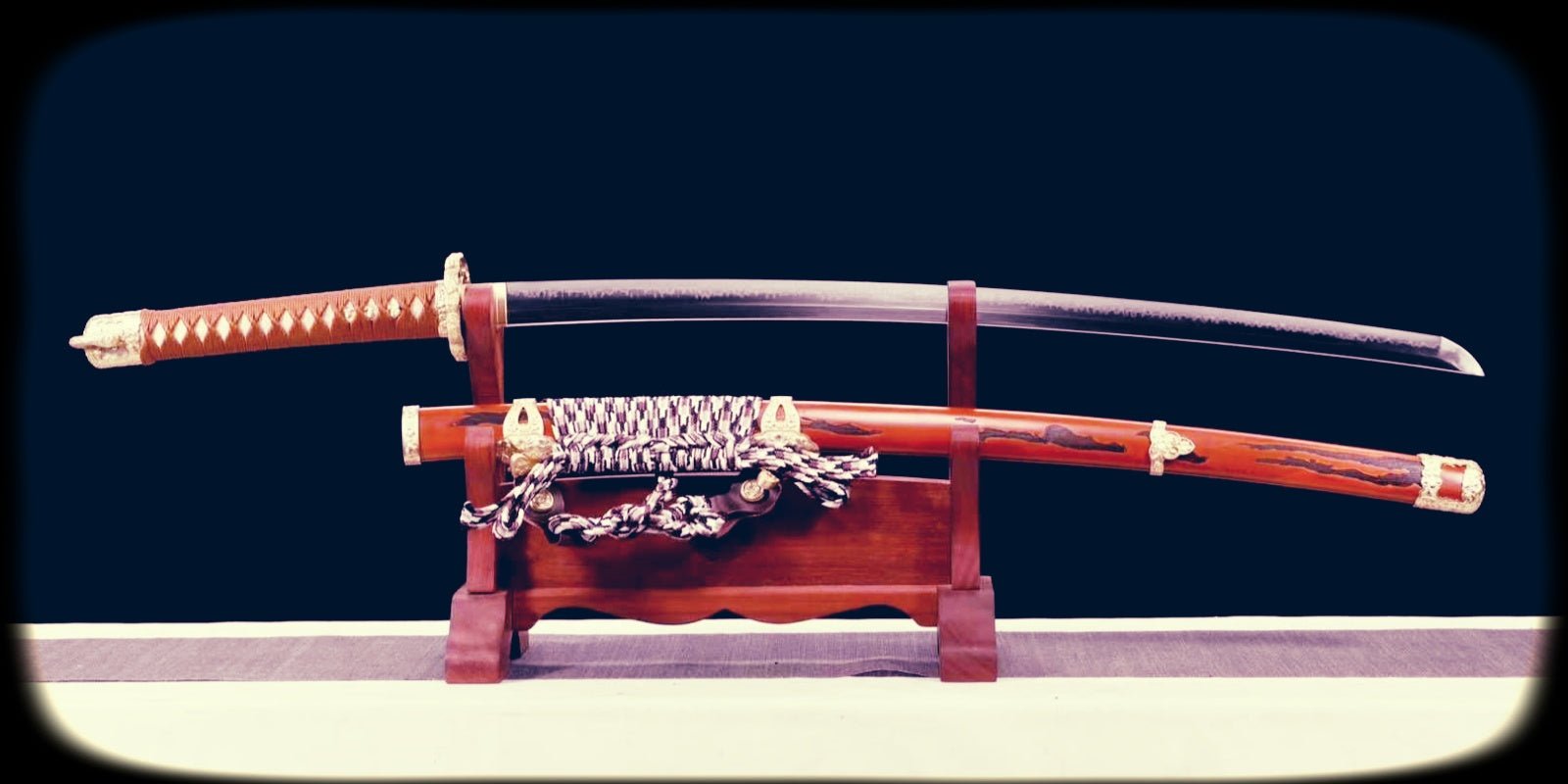
Koiguchi: The Unsung Guardian of the Katana
When it comes to traditional Japanese swords, attention often centers on the blade—its hamon, polish, and graceful curve. But for serious collectors, the integrity of a katana is judged not just by its cutting edge, but by the craftsmanship and precision of every component. One of the most critical—and often overlooked—parts is the koiguchi, the mouth of the saya (scabbard).
What Is the Koiguchi?
The koiguchi is the opening of the scabbard where the blade is drawn and sheathed. Though small in size, it plays a vital role in securing the blade, protecting the saya from wear, and maintaining the sword’s overall performance and longevity. A well-crafted koiguchi ensures smooth drawing, quiet sheathing, and—most importantly—safe handling.
Choosing the Right Materials for Durability
Traditionally, the koiguchi is reinforced with water buffalo horn, prized for its balance of toughness and flexibility. Unlike bare wood, which can crack or deform over time, horn resists impact, absorbs friction, and grips the habaki securely without damaging the blade. Its slight elasticity makes it ideal for frequent drawing and resheathing, particularly during tameshigiri or iaido practice.
Some koiguchi are also reinforced with soft metals like brass or copper. These materials offer excellent wear resistance and structural support, though they must be finely finished to avoid scratching the blade. They also require occasional oiling to prevent corrosion.
Budget swords or training blades often feature plastic koiguchi fittings. While cost-effective, plastic lacks the durability and heat stability of horn or metal, and may become brittle or warped over time. For swords intended for serious use, plastic is generally considered inferior.
How to Tell If a Koiguchi Is Built to Last
When evaluating a katana—especially a traditional or high-end reproduction—the koiguchi can reveal a lot about overall build quality. Here’s what to check:
-
Authentic Materials: Real horn typically shows a subtle translucence and natural grain under strong light. It feels cool and dense, and may display faint fiber-like textures. In contrast, plastic often appears uniformly black, overly smooth, and opaque. Shine a flashlight through the edge—horn may glow amber; plastic won’t.
-
Fit and Retention: With the blade inserted, turn the saya upside down. A properly fitted koiguchi should hold the blade firmly, yet allow for a smooth release with gentle thumb pressure on the tsuba (guard). A fit that’s too loose or too tight can lead to rapid wear, splintering, or unsafe handling.
-
Finish and Craftsmanship: Examine the koiguchi’s edge for cracks, chips, or rough sanding. If the horn is only a thin veneer over wood, it may offer little long-term protection. A high-quality koiguchi will be a solid ring of horn or metal, seamlessly integrated with the saya and free of visible glue lines.
-
Interior Condition: Shine a light into the opening and check for scuff marks or uneven wear. Excessive scratching suggests poor alignment or shaping. A well-made koiguchi should have clean, smooth internal surfaces with minimal interference to the blade’s edge.
Why Collectors Should Care
For collectors of authentic or high-quality replica swords, the koiguchi is more than just a structural feature—it reflects the swordsmith’s attention to detail and the sword’s usability over time. A poorly made or worn koiguchi can lead to rattling blades, blade damage, or the risk of the sword slipping out of the saya unexpectedly.
Experienced collectors often examine the thickness and symmetry of the horn collar, as well as how smoothly it blends into the saya’s lacquer finish. These are not only marks of good craftsmanship but also essential for reliable performance—especially when drawing or sheathing the sword repeatedly.
Final Thoughts
The koiguchi may be small, but its importance is anything but. A well-built koiguchi stabilizes the blade, protects both sword and scabbard, and allows for smooth, confident use. When selecting a traditional katana, never overlook this detail—inspect it, test it, and evaluate its construction. A properly crafted koiguchi is a clear sign of a swordsmith’s dedication and a sword’s long-term reliability.