
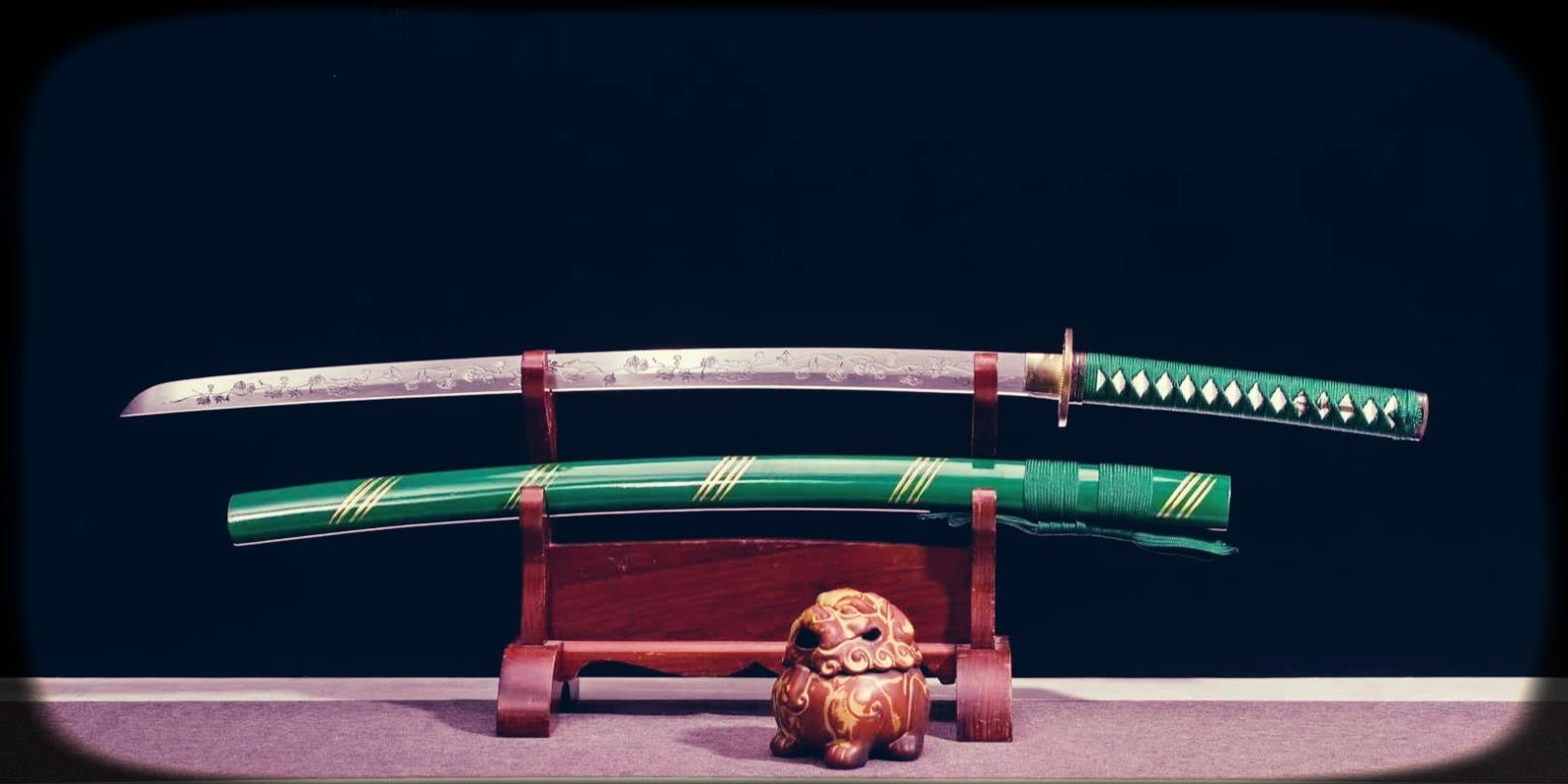
Tsuka: Where Control Meets Craftsmanship
When people picture a katana, the elegant curve of its blade is often the first detail that comes to mind. But the true key to control, comfort, and safety lies in the handle—the Tsuka. It’s here that the katana becomes an extension of the wielder’s will.
What Is the Tsuka?
The Tsuka, or handle, is the part of the katana designed to be gripped. It’s traditionally crafted from two hardwood slabs that encase the tang (nakago) of the blade. These are covered with samegawa (ray skin) and tightly wrapped with tsuka-ito (cord). This layered construction delivers strength, durability, and a comfortable grip. The entire handle is held together by one or two bamboo pegs, known as mekugi, which secure the blade firmly in place during use.
Function: More Than Just a Handle
The Tsuka does far more than provide a place to hold the sword—it plays a vital role in how the katana feels and performs:
-
Structural Integrity: A properly fitted Tsuka keeps the blade stable and secure.
-
Enhanced Grip: The combination of ray skin and cord wrap provides texture and traction, especially important during intensive training.
-
Balance and Control: A well-proportioned Tsuka helps maintain the sword’s center of gravity for smoother handling.
-
Tactile Feedback: Subtle vibrations from the blade travel through the Tsuka, helping the wielder sense impact and timing.
Common Wrapping Styles
The method used to wrap the Tsuka not only affects its appearance but also its functionality:
-
Hineri-maki: The classic crisscross wrap, common in both functional and decorative swords.
-
Katate-maki: A “battle wrap” designed for a firmer grip under pressure.
-
Kumiage-maki and Tsumami-maki: Decorative styles found on high-end or ceremonial blades.
A clean, tight, and symmetrical wrap is a strong indicator of skilled craftsmanship.
What Makes a Quality Tsuka?
-
Solid Fit: There should be no wobble or movement when swinging or drawing the blade.
-
Tight Wrapping: The cord should be snug, with no looseness or fraying.
-
Visible Ray Skin: Genuine samegawa has an uneven, granular surface—never flat or plastic-looking.
-
Symmetry and Alignment: Details like the menuki (ornaments), cord diamonds, and peg holes should be evenly spaced and aligned.
Care and Maintenance Tips
-
Inspect mekugi regularly and replace them if worn or loose.
-
Keep the handle dry to prevent warping or mold in the wooden core.
-
Avoid extreme heat or humidity, which can damage both wood and cord.
-
Have it rewrapped professionally if the cord loosens over time.
Conclusion: The Sword Begins in the Hand
The Tsuka is far more than a handle—it’s the point of connection between the blade and the soul of the user. Whether you practice martial arts or collect fine swords, understanding the Tsuka helps you appreciate the katana not just as a weapon, but as a refined work of functional art.