
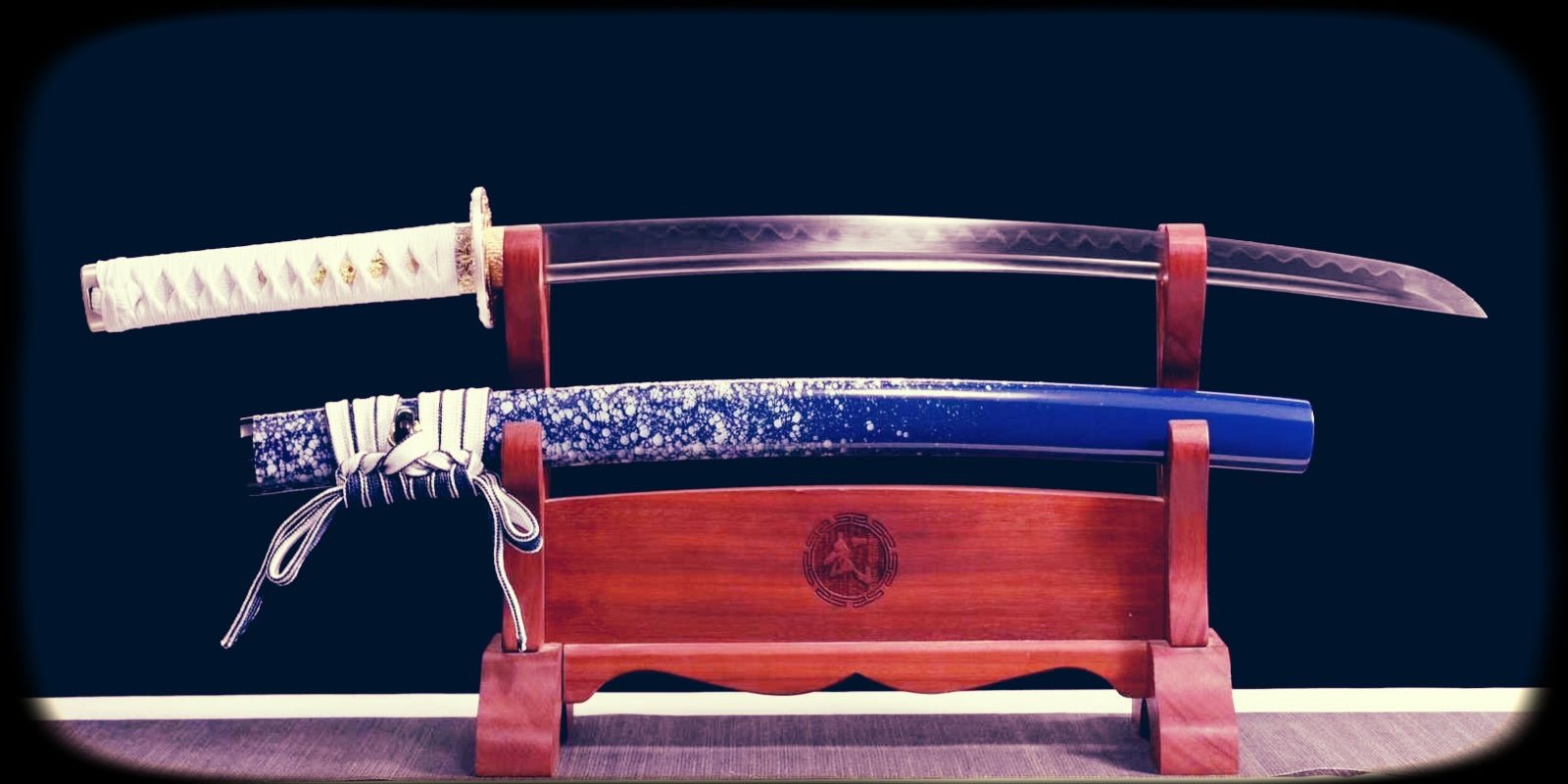
Mune: The Hidden Strength Behind Every Katana
When we admire a katana, our eyes are often drawn to its elegant curvature, gleaming hamon, or intricately wrapped tsuka. But behind these showpieces lies a quiet, structural hero—the mune, or back ridge of the blade. Though it doesn’t cut, it plays a vital role in the katana’s strength, balance, and overall performance.
What Is the Mune?
The mune refers to the spine of the katana—the edge opposite the blade. It runs from the tang (nakago) to the tip (kissaki), forming a ridge that is often overlooked, yet essential to the sword’s construction. While the hamon gets the visual glory, the mune ensures the sword’s structural integrity.
Why the Mune Matters
Though the mune isn’t involved in cutting, it plays a critical role in how a katana performs:
-
Structural Support: The thickness and shape of the mune give the blade strength and rigidity, helping it resist bending under pressure.
-
Balance and Handling: Adjusting the mune’s geometry allows swordsmiths to fine-tune the sword’s weight distribution and handling dynamics.
-
Shock Absorption: During cutting practice or combat, the mune helps absorb impact, reducing stress on the cutting edge.
-
Draw and Sheath: A well-polished mune ensures a smooth draw and re-sheathing experience, minimizing friction with the saya (scabbard).
Types of Mune
There are several traditional mune styles, each with unique aesthetics and functionality:
-
Iori-mune (Peaked Ridge): The most common type, shaped like a traditional gable roof—strong and clean-lined.
-
Maru-mune (Rounded Ridge): A softer, curved profile, often used in decorative blades or lighter swords.
-
Mitsu-mune (Triple-Facet Ridge): A more modern, angular shape with three defined surfaces.
-
Kaku-mune (Square Ridge): A rare, flat-topped style with bold lines and a distinctive appearance.
-
Hira-mune (Flat Ridge): Seen in hira-zukuri style blades, offering minimal ridge height and a sleeker profile.
Each shape impacts the blade’s rigidity, visual presence, and cutting dynamics.
Mune and Swordsmith Craftsmanship
The shaping and polishing of the mune require the same precision as the blade’s edge. Even subtle variations in angle or finish can affect the katana’s balance and strength. A finely crafted mune enhances both the blade’s aesthetic harmony and its practical performance—especially at the kissaki, where the spine helps reinforce the tip during impact.
Subtle Details, Powerful Impact
Some katanas feature decorative elements on or near the mune, such as hi (grooves) to reduce weight, or inscriptions etched near the tang for signature or dedication purposes. In the example above, the mune is elegantly polished, reflecting light in a smooth arc that enhances the sword’s symmetry and showcases the maker’s skill.
Conclusion: Silent Backbone of the Blade
The mune may not be the most talked-about feature, but it is absolutely essential. It provides the katana with its strength, defines its balance, and supports its beauty. For collectors, martial artists, or enthusiasts, understanding the mune is key to appreciating the katana as more than just a blade—it’s the art of structure as much as the art of edge.