
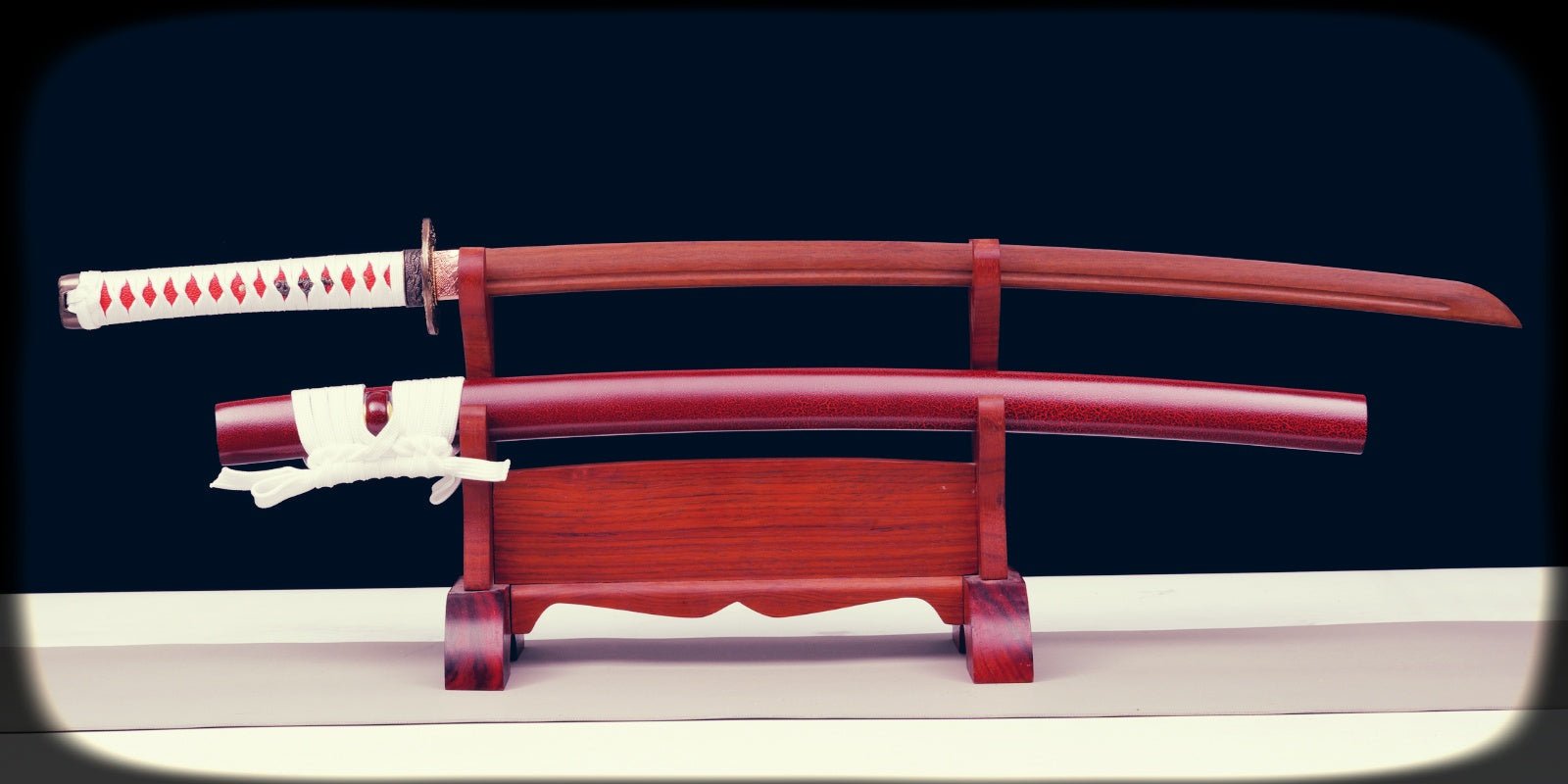
When Your Katana Feels Too Big or Too Heavy: Why a Wooden Sword Might Be the Smartest Choice
It’s a common moment—especially for beginners.
You buy a full-length katana-style sword because it looks powerful and “real.” Then it arrives, and the first session is… humbling. The sword feels heavier than you expected. The tip drifts off line. Your wrists and shoulders fatigue quickly. And instead of training smoothly, you find yourself fighting the weapon just to keep it under control.
If that sounds familiar, don’t worry. It doesn’t mean you’re weak or doing everything wrong. More often, it means you started with a tool that’s simply too demanding for your current stage.
One of the most effective solutions is also the most overlooked:
Train with a wooden sword (often called a bokken) until your control catches up.
This isn’t about replacing steel forever. It’s about using the right tool to build the fundamentals that make any sword feel easier later—posture, grip stability, clean mechanics, and repeatable control.
Why a Sword Can Feel “Too Heavy” (Even When the Scale Says Otherwise)
Most people assume the issue is just weight. In reality, a sword can feel too heavy for a few different reasons—and understanding them helps you fix the problem faster.
1) Length creates leverage
A katana-style sword is essentially a long lever. Even if the overall weight is reasonable, the mass sits out in front of your hands. That distance multiplies the effort it takes to control the arc—especially when you try to stop cleanly.
So a sword can feel “too heavy” not because it’s unusually heavy, but because it’s hard to manage at the end of the swing.
2) Tension makes everything harder
When a weapon feels difficult—or when you’re worried about safety—your body tends to tighten up:
-
shoulders rise
-
elbows stiffen
-
grip becomes too hard
-
breathing becomes shallow
That tension makes the sword feel heavier, reduces accuracy, and burns out your arms faster. You end up tired before you’ve done enough quality practice to improve.
3) “Standard size” doesn’t fit everyone
A “standard” sword is not automatically a good match for your body. Height, arm length, hand size, wrist tolerance, and general strength all change how a sword feels. A setup that feels balanced to one person can feel tip-heavy and unstable to another.
That’s normal—and it’s exactly why training tools exist.
The Bigger Risk: Forcing Heavy Practice Can Build Bad Habits
A lot of people try to solve the problem by pushing harder: “I’ll just power through until I get stronger.”
Strength matters, but here’s the catch: training under load with poor control often teaches your body the wrong movement pattern.
Common habits that show up when a sword feels too big or too heavy:
-
muscling the cut with the shoulders
-
losing alignment mid-swing (the blade twists slightly)
-
bending the wrists to compensate
-
over-gripping (fast fatigue, stiff technique)
-
leaning forward and collapsing posture
-
rushing because stopping feels difficult
If you repeat these patterns, they become muscle memory. Later, even with a better sword, you may keep moving the same inefficient way.
That’s why a wooden sword can be such a smart step: it lets you build clean mechanics first, without fighting the tool.
Why a Wooden Sword Works So Well
A wooden sword isn’t a “fake sword.” It’s a training tool designed for controlled repetition—exactly what beginners need to improve quickly and safely.
Benefit 1: Safer practice means more consistent practice
Safety isn’t just about avoiding injury. It affects your mindset.
When you’re less worried about hurting yourself, damaging your space, or making a costly mistake, your body stays more relaxed. And relaxed practice is usually better practice—cleaner, smoother, and easier to repeat.
A wooden sword is easier to train with:
-
at home
-
in smaller spaces
-
for longer sessions
-
with less fear and tension
Benefit 2: Lighter weight supports better technique
A quality wooden sword is typically much lighter than steel, and the difference becomes huge over time.
Lighter training means:
-
more repetitions before fatigue
-
more consistent form from start to finish
-
fewer “compensation habits” caused by strain
-
more focus on alignment and control
For beginners, quality reps beat tough reps almost every time.
Benefit 3: Lower cost and minimal maintenance
Wooden swords are generally more affordable and much easier to maintain. You don’t need to worry about rust, edge damage, or expensive repairs after a small mistake.
That makes them especially useful during the learning phase—when accidental bumps, tip contacts, and space misjudgments are common.
What Wooden Sword Training Builds (That Transfers to Steel)
Training with wood isn’t “less real.” It’s simply focused on fundamentals—things that matter whether you use wood or steel.
1) Grip control without over-gripping
Good grip is stable, but not crushing. Wooden sword training helps you find the balance:
-
firm hands
-
relaxed shoulders
-
stable alignment through the swing
This directly improves control and consistency later with steel.
2) Posture and body mechanics
A clean swing comes from your whole body, not just your arms. Wooden sword practice reinforces:
-
stable stance
-
balanced weight shifts
-
connected movement through the core
-
smooth recovery after the cut
3) Timing and stopping control
Many beginners can swing fast—but can’t stop cleanly. A wooden sword lets you train:
-
controlled acceleration
-
controlled deceleration
-
stable finishing positions
-
safe recovery back to guard
That “end control” is one of the biggest gaps for new practitioners.
4) Spatial awareness
Even though it’s wood, the length and motion are real. You build better awareness of:
-
distance
-
swing arc
-
surroundings
-
safe handling habits
How to Choose the Right Wooden Sword
Not all wooden swords feel the same. If you want the training benefits, choose one that fits your body and your goals.
1) Choose a wood type that matches your needs
Different woods vary in density and feel. In simple terms:
-
Ash: a balanced option—tough, resilient, popular for general practice
-
Oak: dense and durable, often heavier in hand
-
Walnut: strong with attractive grain; often a collector-friendly choice
-
Birch: tends to be lighter and beginner-friendly
If your main issue is “too heavy,” start with a balanced, manageable feel, not the heaviest option.
2) Pick a length you can control in your training space
If you practice indoors or in a smaller room, slightly shorter can be a practical choice. The best length is the one you can handle confidently without constantly worrying about ceilings, walls, or furniture.
3) Pay attention to balance, not just total weight
A wooden sword can be light but still feel awkward if it’s too tip-heavy. A simple test:
-
balance it on one finger and see where it naturally rests
Many people prefer a balance point not too far forward from the guard area.
4) Check workmanship and safety details
Look for:
-
smooth surface (no rough grain)
-
slightly rounded edges
-
straight, consistent shape
-
grain running along the length
-
no cracks or warping
A good wooden sword should feel solid, predictable, and comfortable.
A Simple Beginner Training Plan (4–6 Weeks)
If steel feels too heavy right now, use this plan to build control first.
Weeks 1–2: Calm fundamentals
-
5–10 minutes per session
-
3–5 sessions per week
-
slow, clean swings
-
focus on posture, grip, and straight lines
-
stop the sword cleanly at the end of each rep
If your shoulders rise or your grip tightens, slow down and reset.
Weeks 3–4: More reps without losing form
-
10–15 minutes per session
-
add simple sequences (two or three swings, reset, repeat)
-
keep the quality consistent from rep 1 to rep 50
If your form collapses late in the session, shorten the session. Quality comes first.
Weeks 5–6: Smoothness and controlled speed
-
15–20 minutes per session
-
increase speed only if alignment stays consistent
-
focus on recovery and stable finishing positions
How to Transition Back to Steel
You don’t need to “switch back” all at once. Blend both tools.
Try this:
-
do your main practice with wood
-
add 5 minutes of slow steel handling at the end
-
stop before fatigue changes your form
-
alternate days: technique-heavy wooden sessions + short steel familiarization
If steel still feels heavy, take it as feedback. Go back to wood, build cleaner reps, and the transition will feel easier.
For Collectors: Why Wooden Swords Still Belong in Your Lineup
Even if you mainly collect, a wooden sword can be surprisingly useful. It offers a low-risk way to explore:
-
handling and leverage
-
proportions and balance
-
how technique affects “feel”
-
what makes a sword easier (or harder) to control
It can also help you make smarter buying decisions, because you’ll better understand how weight distribution matters beyond specs and photos.
Closing Thoughts: The Best Sword Is the One You Can Control
If your sword feels too big or too heavy, the answer isn’t always “push harder.” Often, the smarter move is to train with a tool that lets you improve safely and consistently.
A wooden sword helps you:
-
practice more often
-
keep technique cleaner
-
reduce risk and stress
-
build real control that transfers to steel
Train with what you can control today, and steel will feel better tomorrow—because you’ll be directing the sword, not fighting it.