
Samegawa on Katana: Function, Craftsmanship, and Practical Value
When admiring a katana, most people first notice the blade’s curve and polish. Yet, one of the most underrated components is the Samegawa—the ray skin wrap on the handle. Far beyond decoration, Samegawa plays a key role in grip comfort, durability, and overall handling performance.
What Is Samegawa?
Samegawa, often called ray skin, is traditionally used to cover the wooden core of a katana handle (tsuka). Despite its name, it usually comes from stingray, not shark. Its unique, pebbled texture—known as nodules—enhances both aesthetics and functionality.
Why Samegawa Matters: Three Key Benefits
1. Superior Grip and Control
The coarse texture of Samegawa locks the handle wrap (ito) firmly in place. This reduces slipping, providing a more stable grip during swings—even with sweaty hands or gloves.
2. Increased Durability
Samegawa adds a protective layer to the handle core, resisting abrasion, moisture, and impact. This extends the lifespan of the handle, especially under frequent use.
3. Enhanced Structural Support
Ray skin reinforces the wooden handle, reducing the risk of cracking or warping over time, and improving the sword’s overall stability.
Wrapping Styles: Full Wrap vs. Panel Wrap
-
Full Wrap: The entire handle is covered with ray skin before being wrapped with ito. This style offers maximum durability, a uniform look, and is common in high-end swords.
-
Panel Wrap: Ray skin panels are applied only on each side of the handle, leaving the top and bottom exposed. This is a practical option for training swords, balancing performance with cost savings.
Natural vs. Synthetic Samegawa: How to Tell the Difference
| Feature | Natural Samegawa | Synthetic Samegawa |
|---|---|---|
| Pebble Texture | Uneven, organic nodules | Uniform, repetitive pattern |
| Back Surface | Fibrous texture | Smooth, plastic-like |
| Feel | Firm with slight flexibility | Either overly stiff or soft |
| Durability | High resistance to wear and heat | Lower durability, prone to damage |
Natural Samegawa offers superior durability, grip, and authenticity, making it ideal for functional swords. Synthetic versions are cheaper but mainly serve decorative purposes.
Example: Black Tsuka with Samegawa Panels
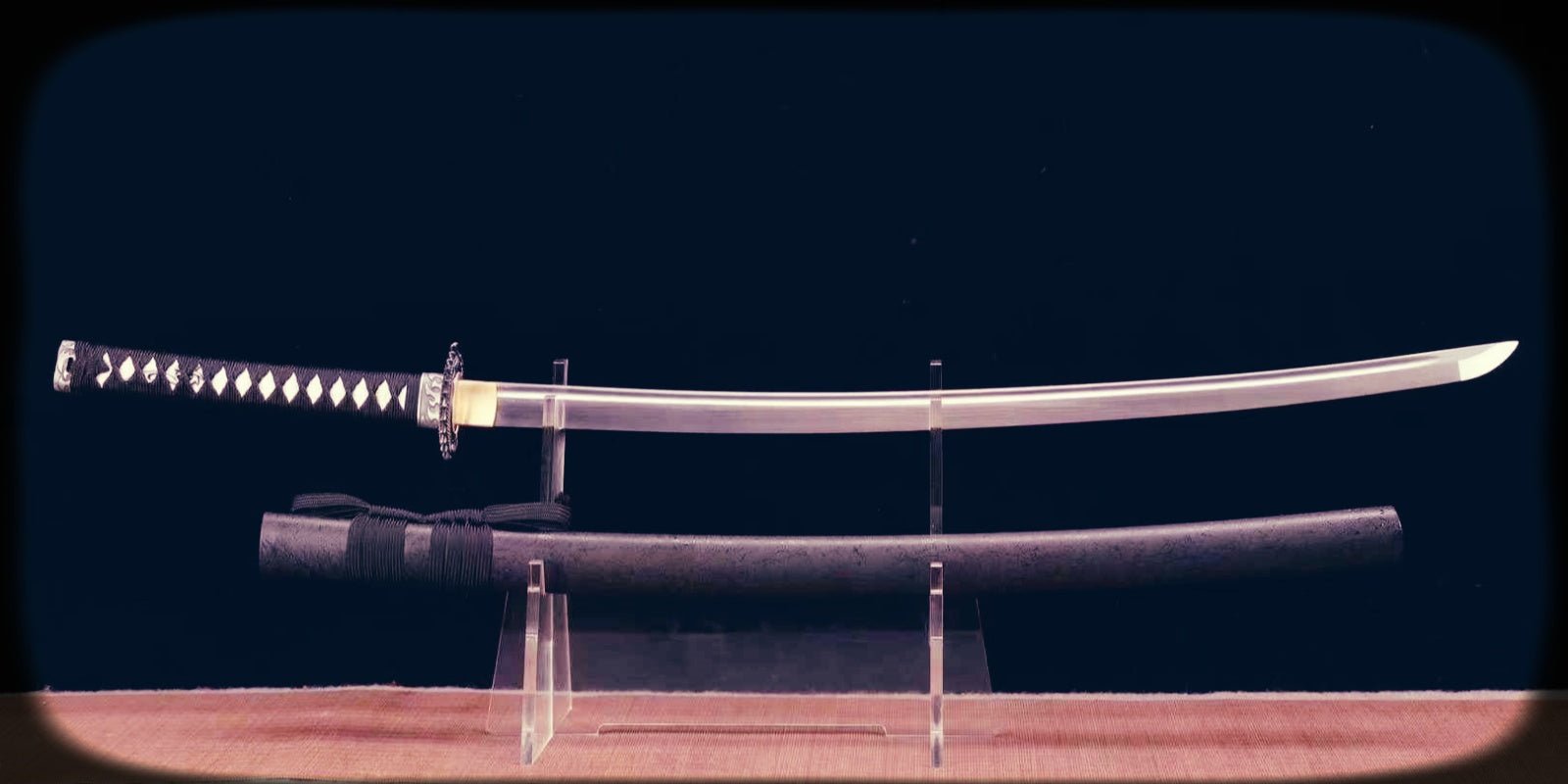
A good example is a katana featuring a black ito wrap with white Samegawa panels visible through diamond-shaped openings. The natural nodules contrast sharply with the dark wrap, offering both excellent grip and refined visual appeal. This setup is favored by practitioners who value both function and clean aesthetics.
How to Identify Quality Samegawa
-
Look for irregular, natural pebble patterns.
-
Check for a fibrous backing on the reverse side.
-
Test for light elasticity—natural ray skin will flex slightly.
-
Trust sellers who clearly label “genuine,” “synthetic,” “full wrap,” or “panel wrap.”
Modern Samegawa Trends
Modern custom katanas use Samegawa in more than just natural white. Dyed ray skin in black, red, or blue is increasingly popular, combining traditional performance with personalized aesthetics.
Is Samegawa Worth It?
If you want a sword with excellent grip, longevity, and authentic craftsmanship, natural Samegawa is absolutely worth it. For regular training, a panel wrap provides great practicality and value. For display or collection, a full wrap offers the highest aesthetic impact.
No matter your preference, understanding Samegawa helps you choose a katana that’s not only beautiful but built to perform.