



Description
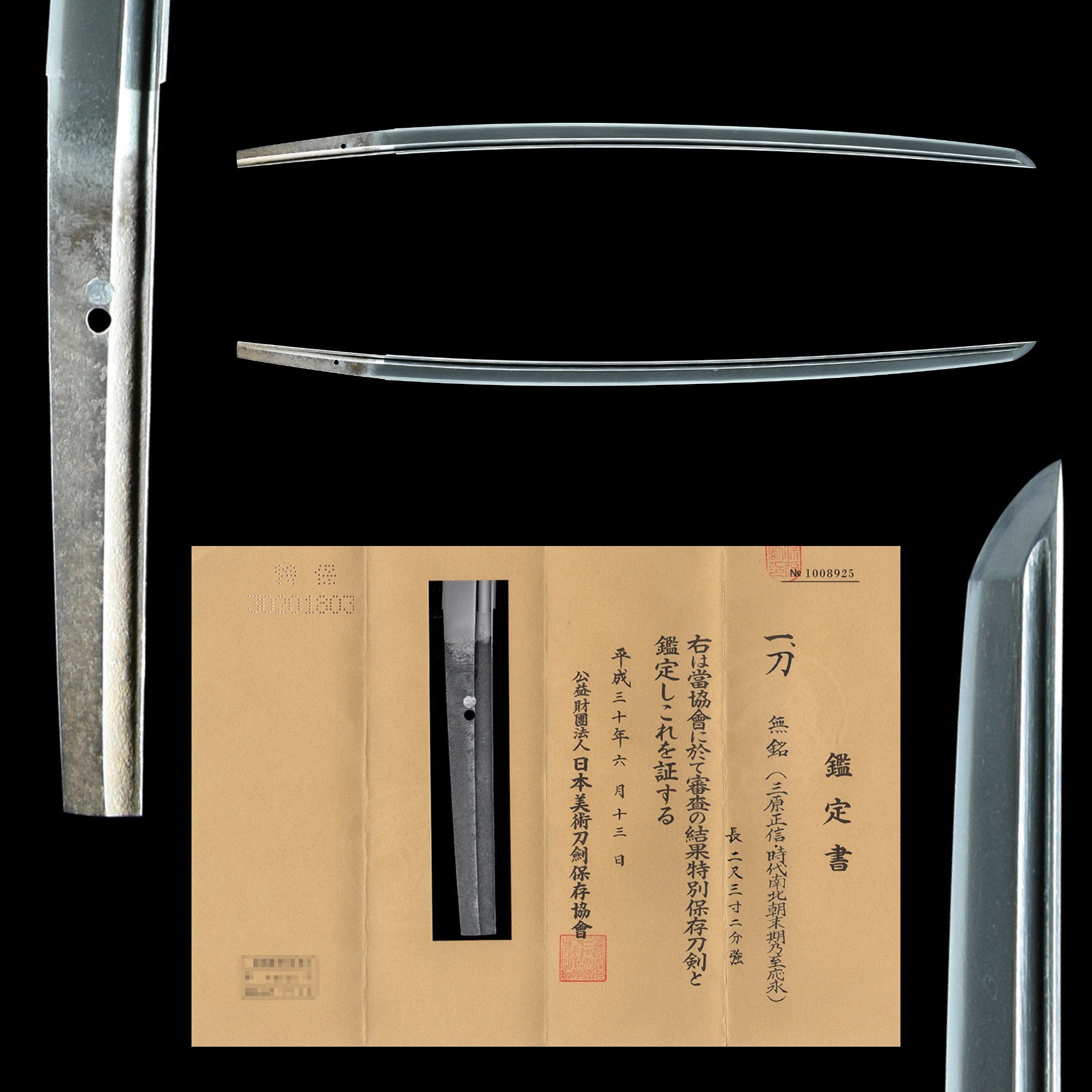
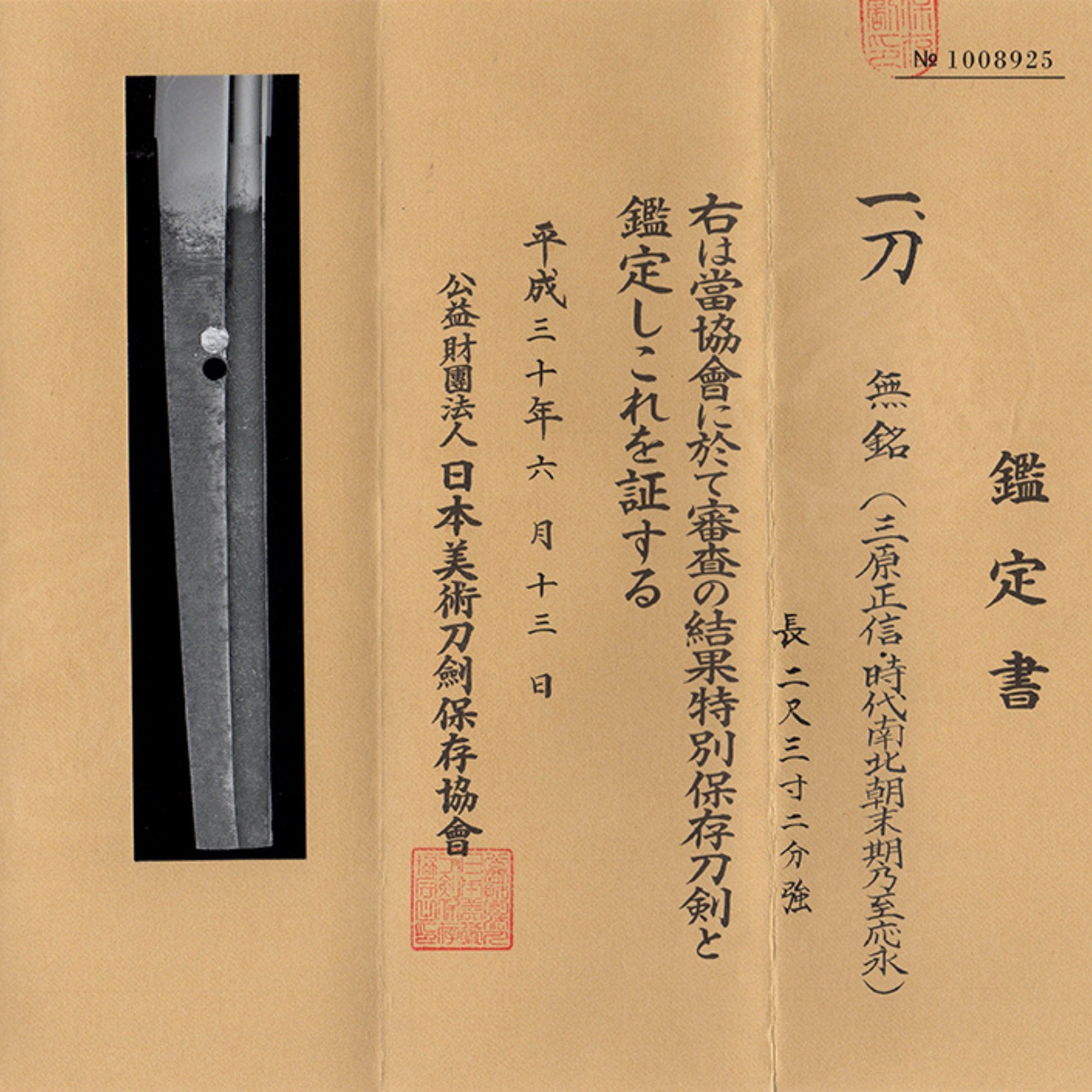
Authentic Nihontō Japanese Sword Katana Attributed to Mihara Masanobu 三原正信 NBTHK TOKUBETSU HOZON TOKEN Certificate
In Bingo, where it is said that Yamato swordsmiths relocated from the early Kamakura period, the Yamato tradition was followed without influence from neighboring Bizen. Masaiye, the founder of the Bingo Mihara school, displayed craftsmanship akin to Yamato Kanehisa.
Mihara Masanobu, classified among the early Mihara school swordsmiths, was active from the Nanbokucho period Enryaku (1381) through the early Muromachi period Meitoku (1390). His son moved from Mihara to Tomo, becoming the founder of the Tomo Mihara school.
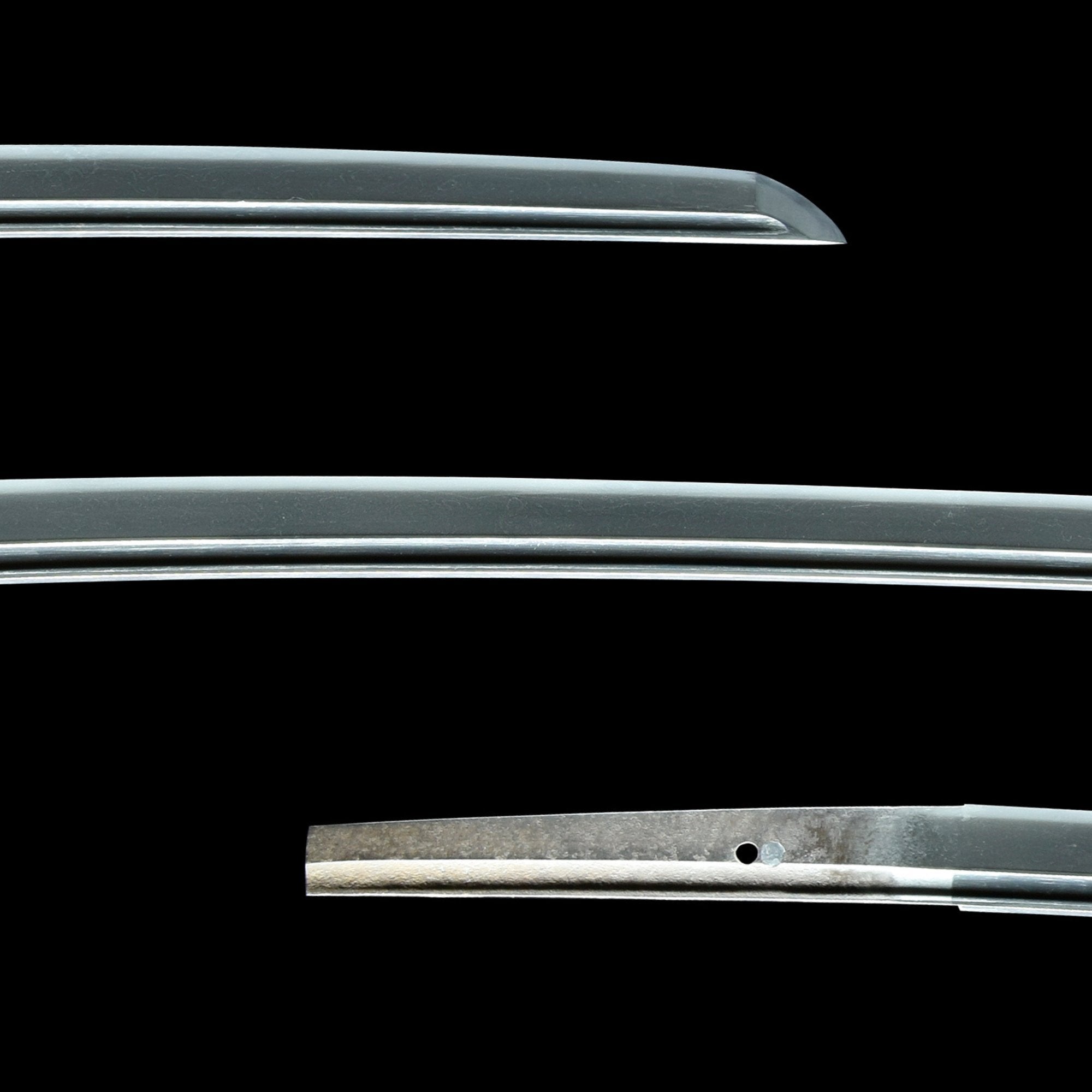
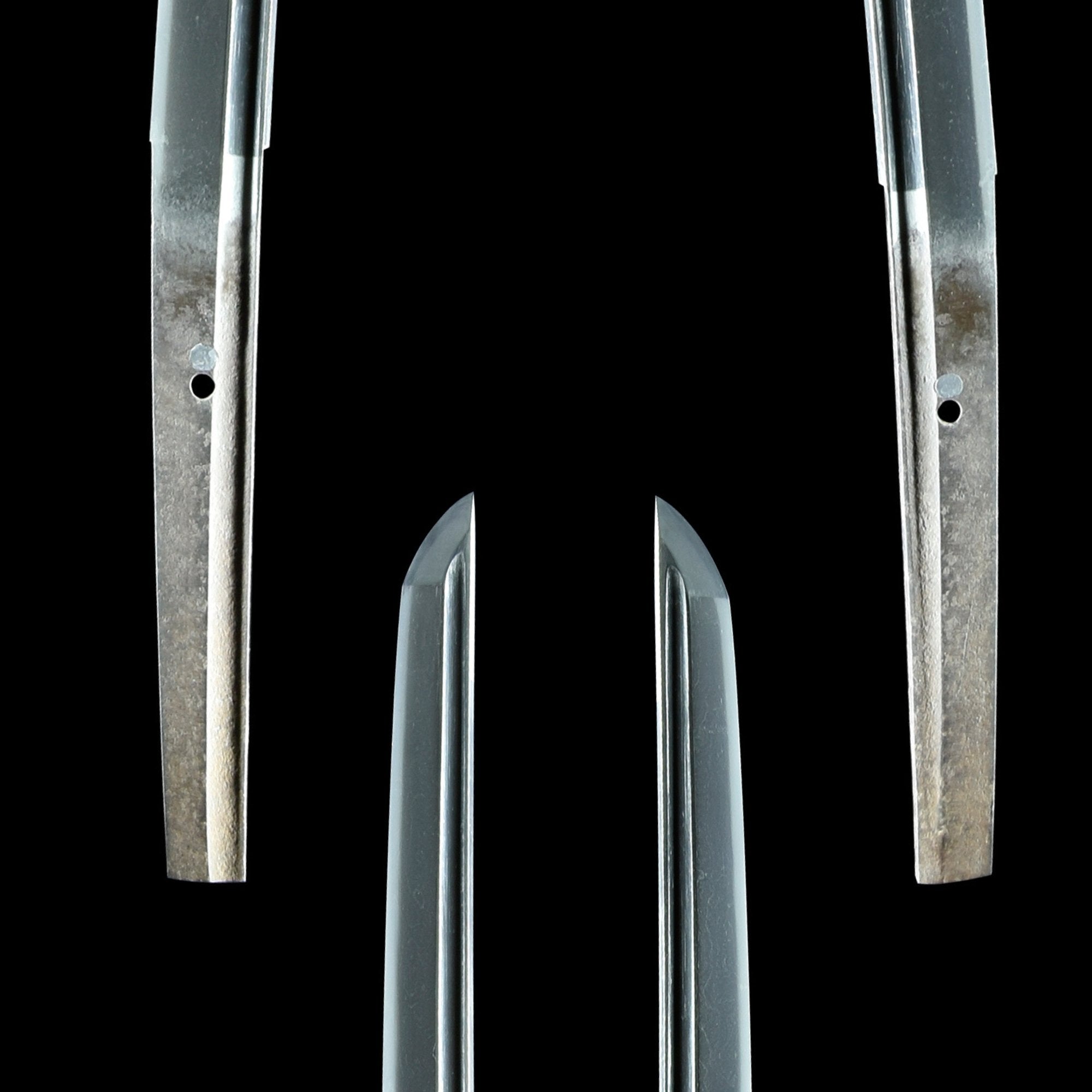
This sword has a hada mixed with itame and mokume, showing some flowing patterns with a slightly prominent grain. While it appears to have a simple suguha at first glance, closer inspection reveals fine activities within the hamon, such as nie extending to the blade's interior, subtle waviness, and interplay of itame and mokume. The piece demonstrates a sophisticated ancient aesthetic distinct from later Mihara works, with abundant hamon activity and a desirable length of over 71 cm.
Currently, it features a wooden habaki with the same tsuka, so it would be ideal to craft a new habaki, finish it up, and challenge for an Important Sword designation.
Bare weight: 600 grams.
Nihontō Information
| Name 名称 | 無銘(三原正信)Mumei(Mihara Masanobu) - |
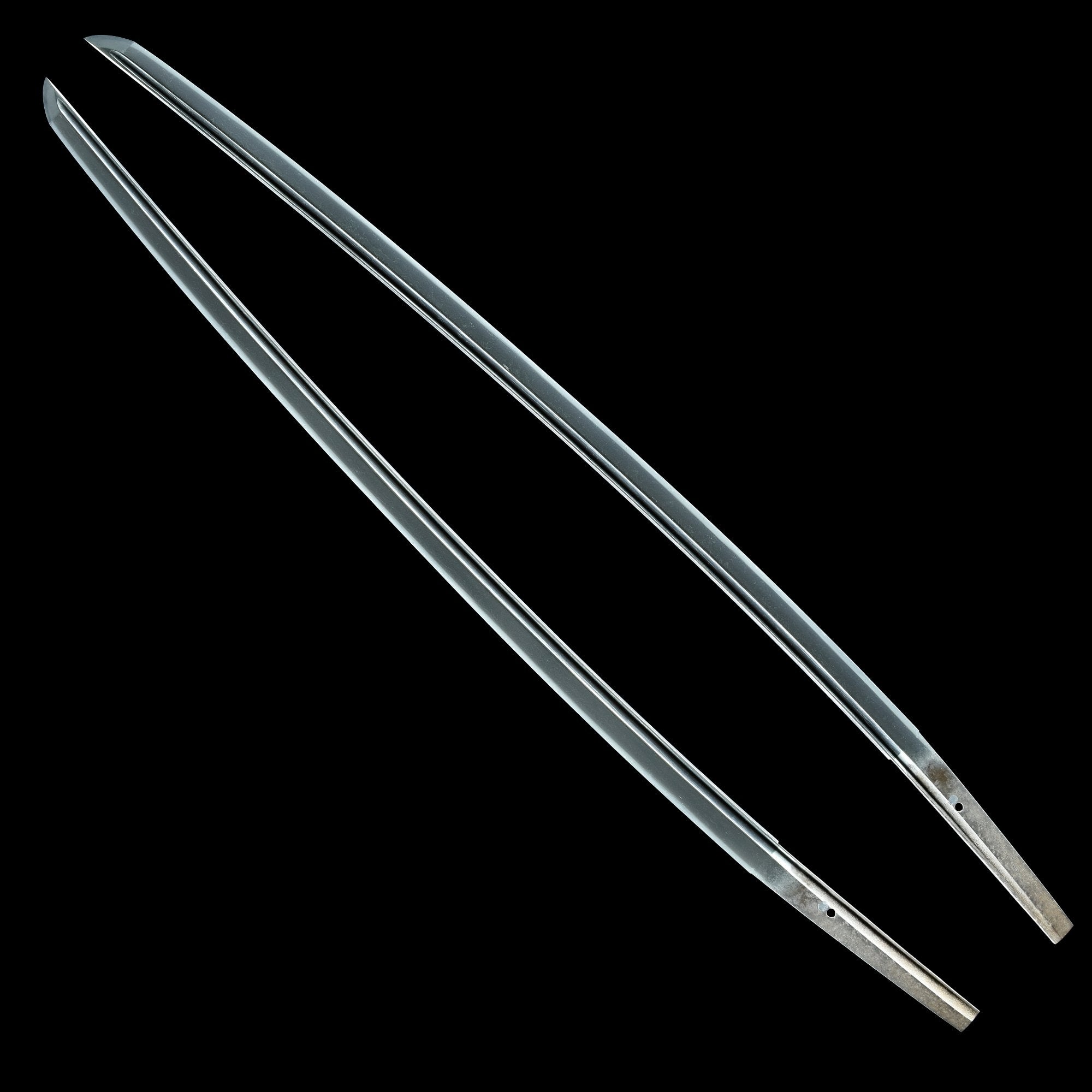
| Blade Length 刀長 | 二尺三寸二分七厘 / 70.5 cm |
| Sori 反り | 四分四厘 / 1.32 cm |
| Blade Width 元幅 | 28.1 mm |
| Blade Thickness 元重 | 6.1 mm |
| Tip Width 先幅 | 物打24.2 mm 横手位置19.6 mm |
| Tip Thickness 先重 | 物打5.3 mm 松葉位置3.5 mm |
| Mekugi-ana 目釘穴 | 2個(1埋) |
| Age 時代 | 南北朝末期~室町初期應永頃The last years of Nanbokucho ~ early years of Muromachi era (14th to 15th century) |
| Certificate 鑑定書 | 特別保存刀剣鑑定書(NBTHK TOKUBETSU HOZON TOKEN Certificate) |
| Registration 登録 | 昭和34年7月9日 東京都登録Registered on July 9, 1959, in Tokyo Prefecture |
| Included 附属 | 木はばき(共柄)(Wooden habaki (matching handle)) |
| 白鞘 (Shirasaya Case) | |


Shopping with Us (Read Before Purchase)
Estimate shipping