


Description
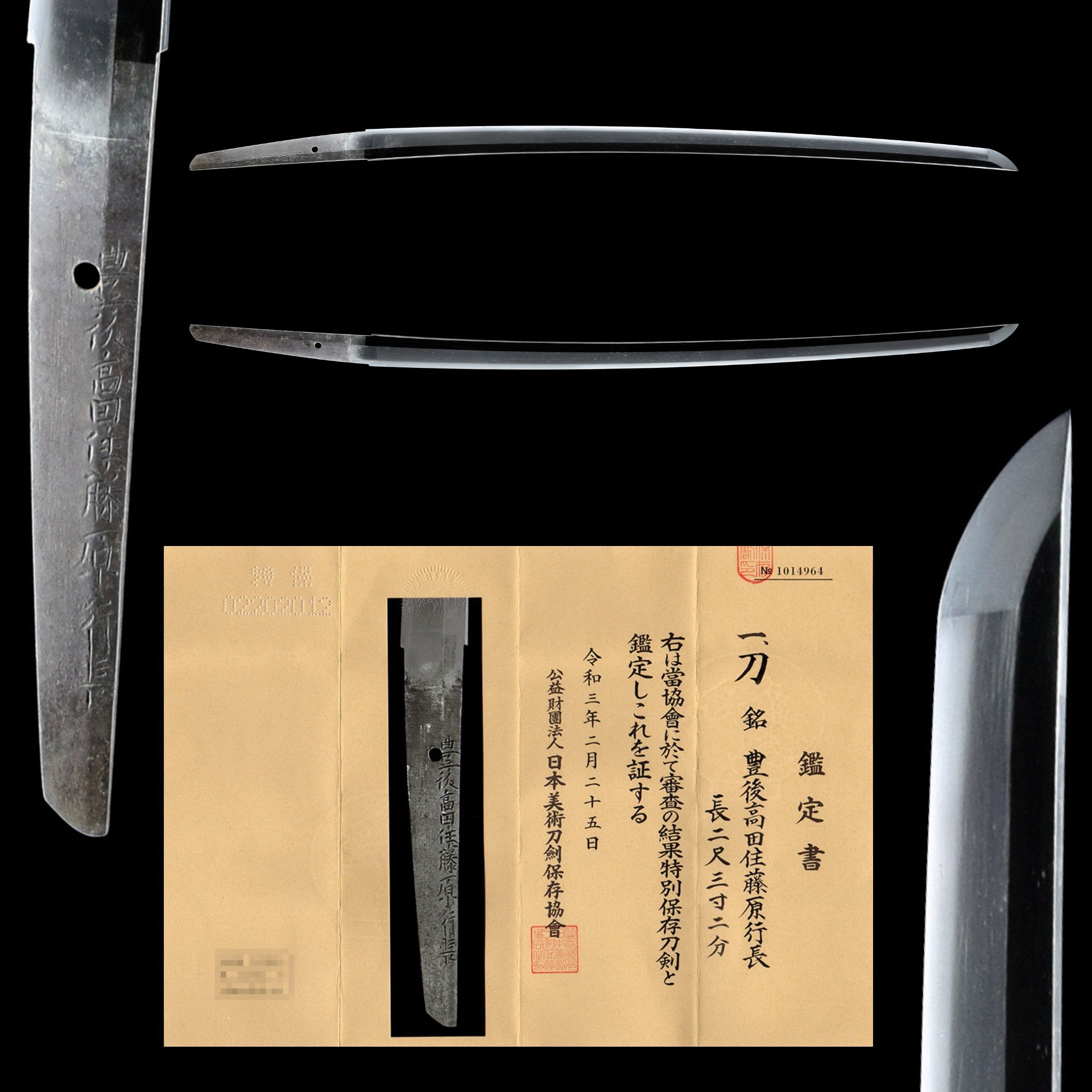
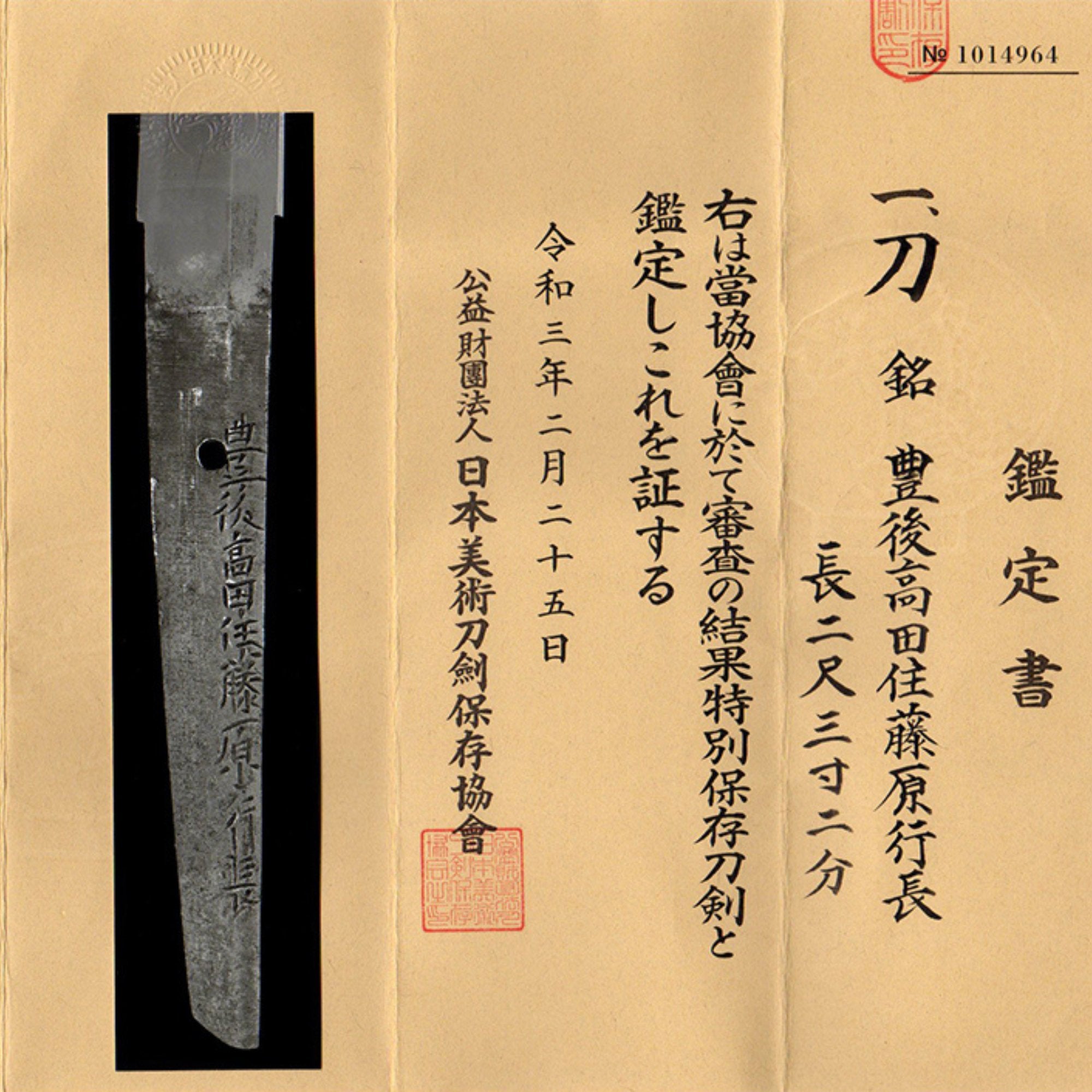
Authentic Nihontō Japanese Sword Katana Signed by Bungo Takada ju Fujiwara Yukinaga 豊後高田住藤原行長 NBTHK TOKUBETSU HOZON TŌKEN Certificate
The 豊州高田派 (Hoshu Takada school) was a group of swordsmiths that flourished in the Takada area of Bungo Province (currently near Tsurusaki in Oita City). Many of the works from the Koto period are signed with the Taira surname, and these are referred to as 平高田 (Taira Takada). From the Shinto period onward, the swords began to be signed with the Fujiwara surname, hence they are commonly called 藤原高田 (Fujiwara Takada). This school has been highly regarded for producing practical swords and was favored by many warriors.
Several smiths with the name 行長 (Yukinaga) have been confirmed in Bungo Province. The earliest known works date back to the Tensho period in the late Muromachi period. This particular piece is believed to be the work of a Yukinaga from the early Edo period.
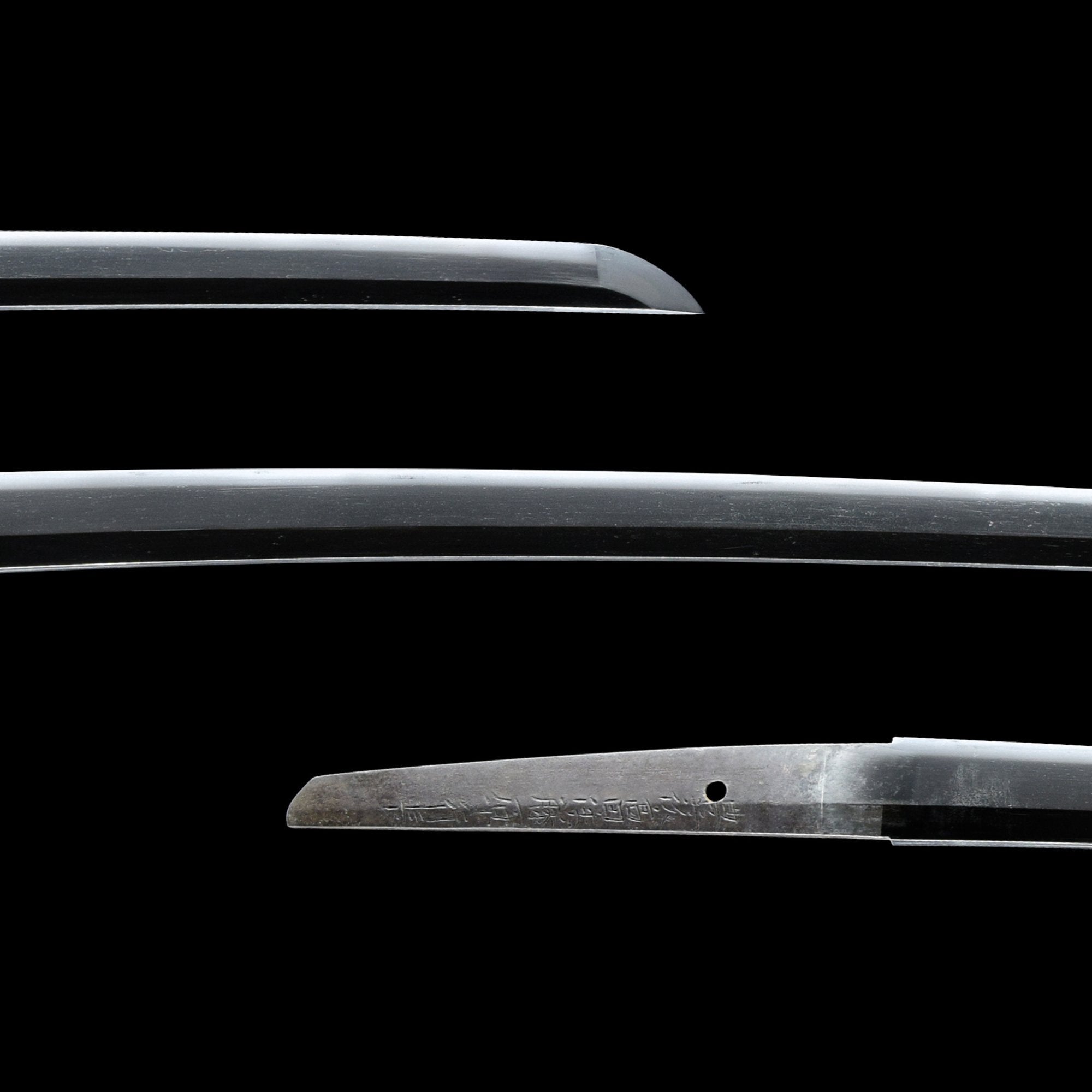
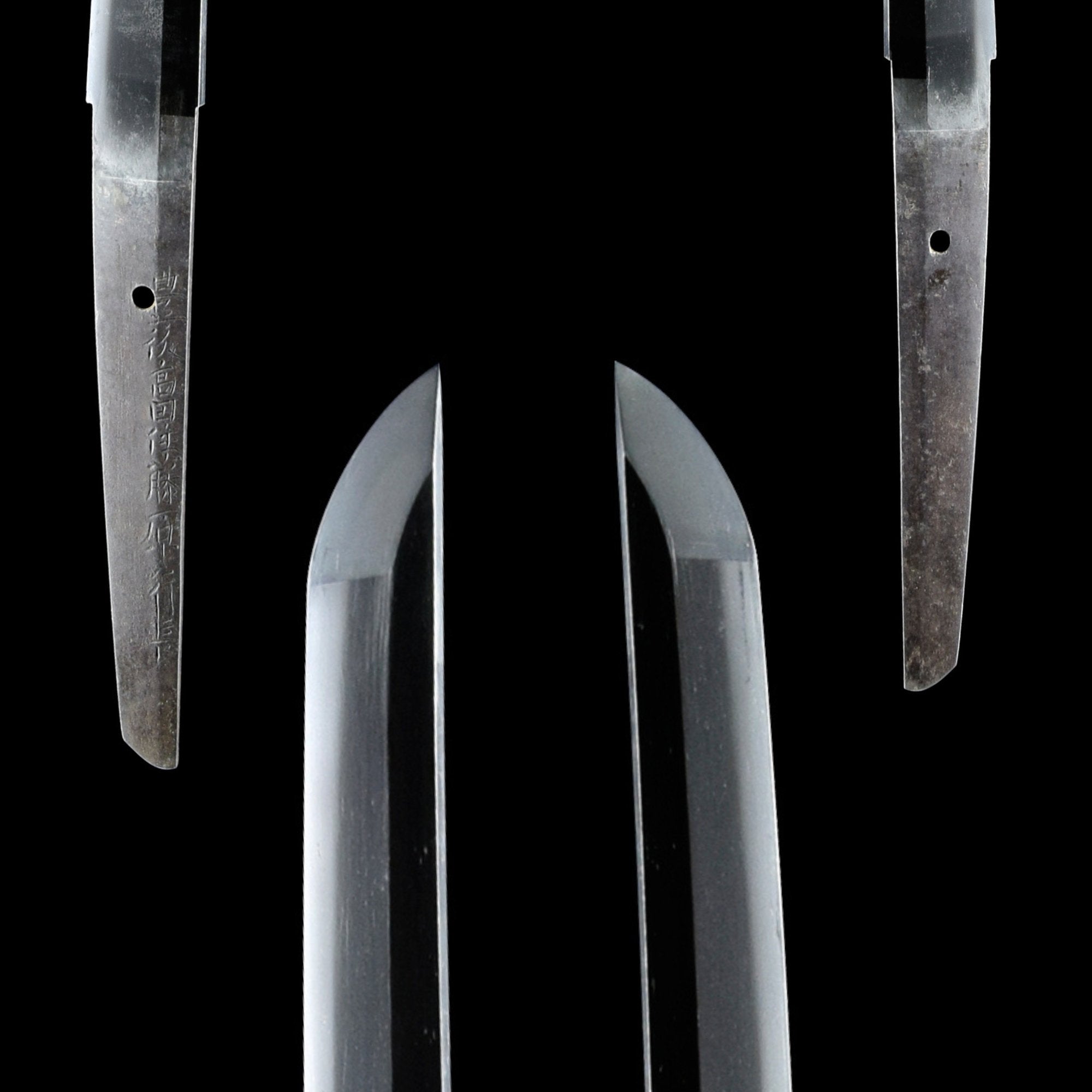
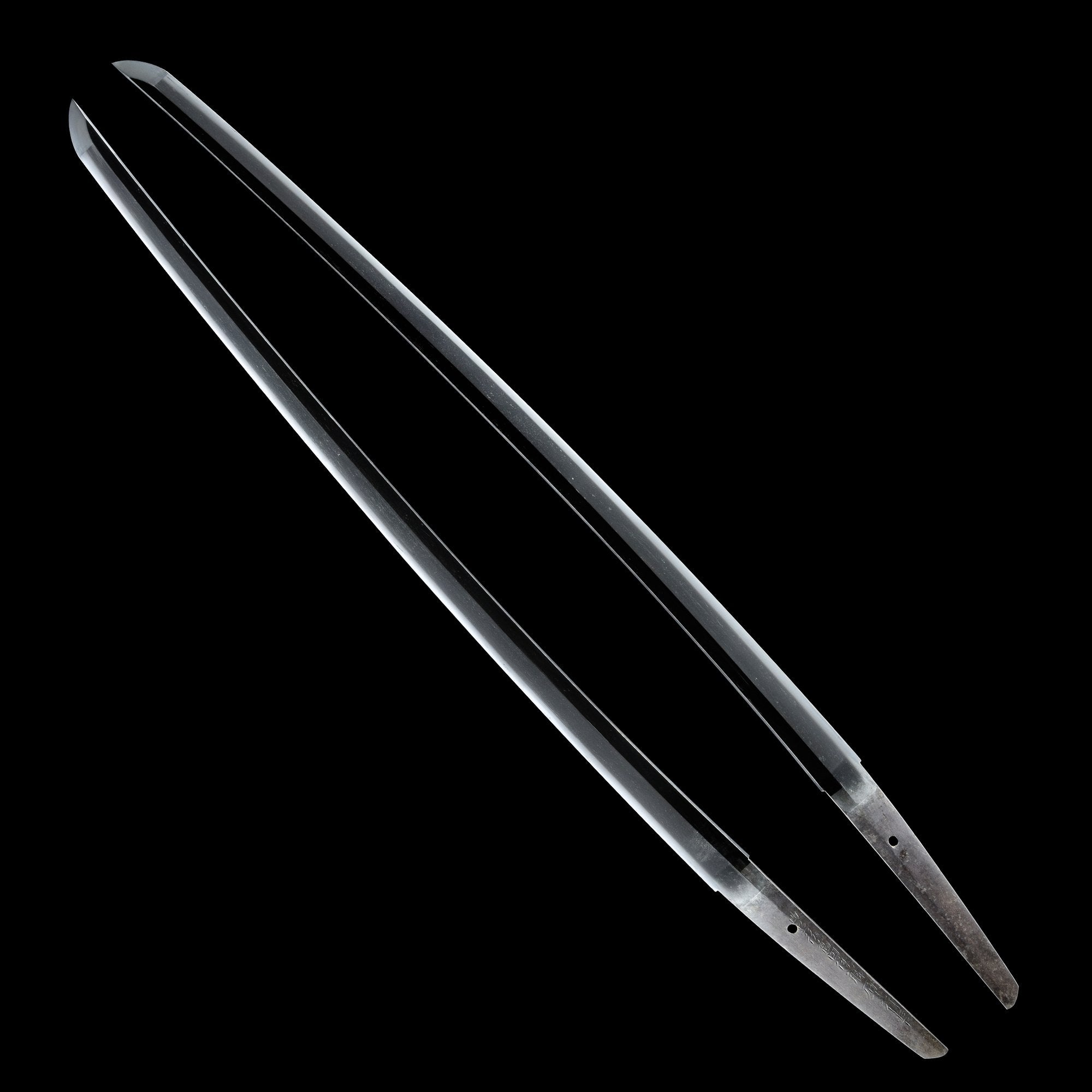
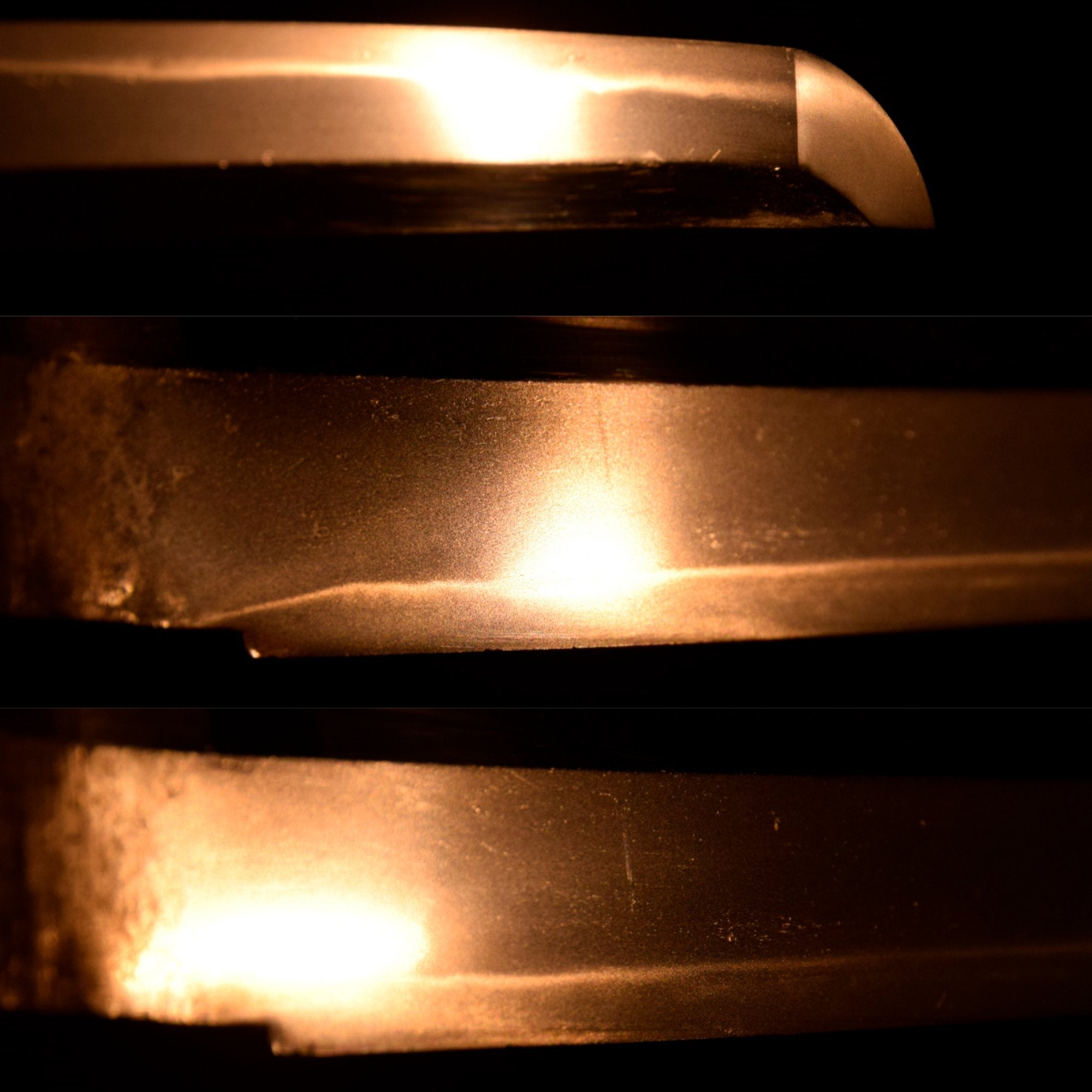
The sword exhibits the typical Kanbun Shinto style with a shallow curvature and a noticeable difference in width between the base and tip. Although there are some prominent scratches in its current state, they do not hinder the appreciation of the steel, which has a well-forged, fine ko-itame hada. The hamon is a bright and clear chu-suguha with straight kinsuji lines that run alongside the inside edge of the hamon, and areas where sunagashi can be observed, showcasing Yukinaga's high level of craftsmanship in creating straight-edge hamon.
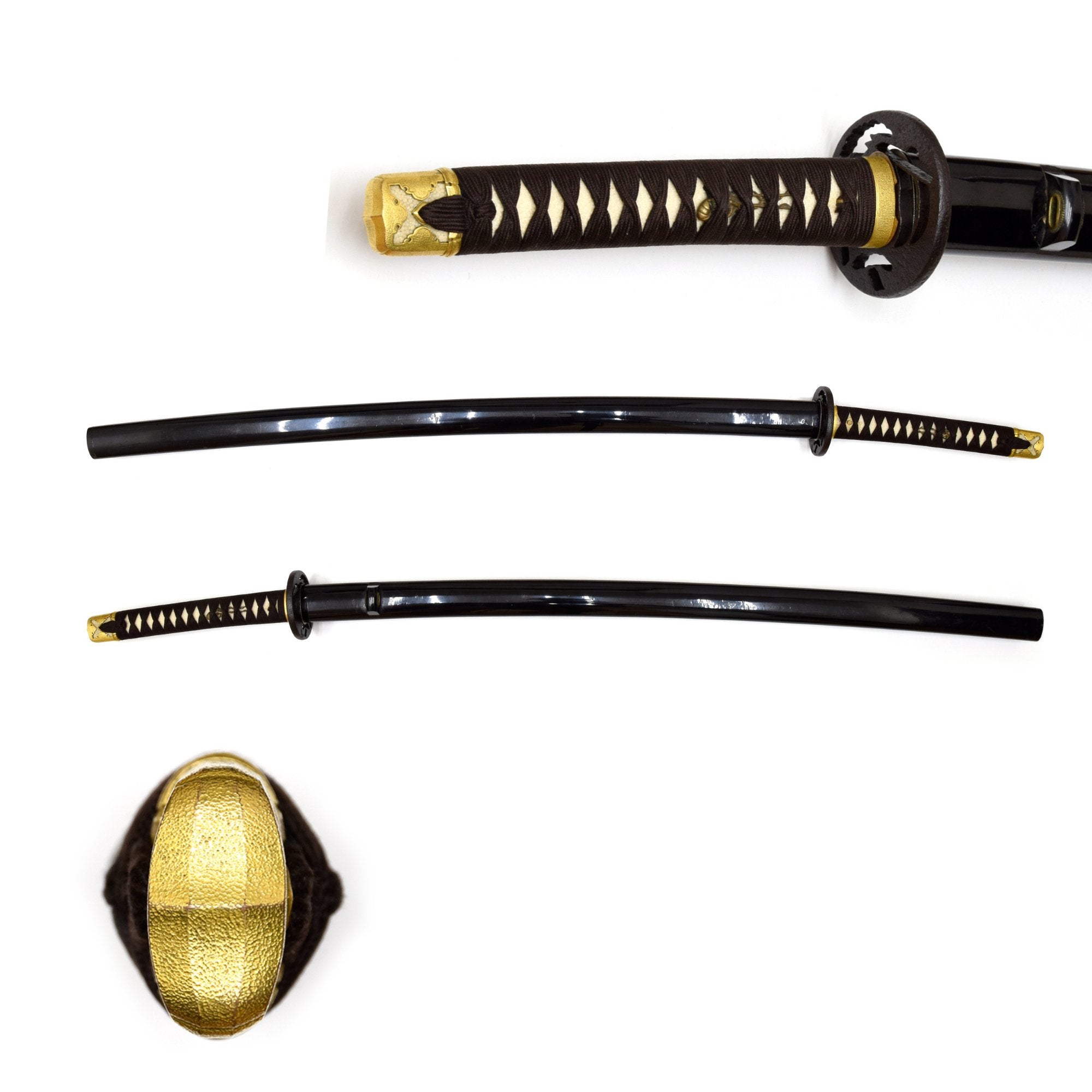
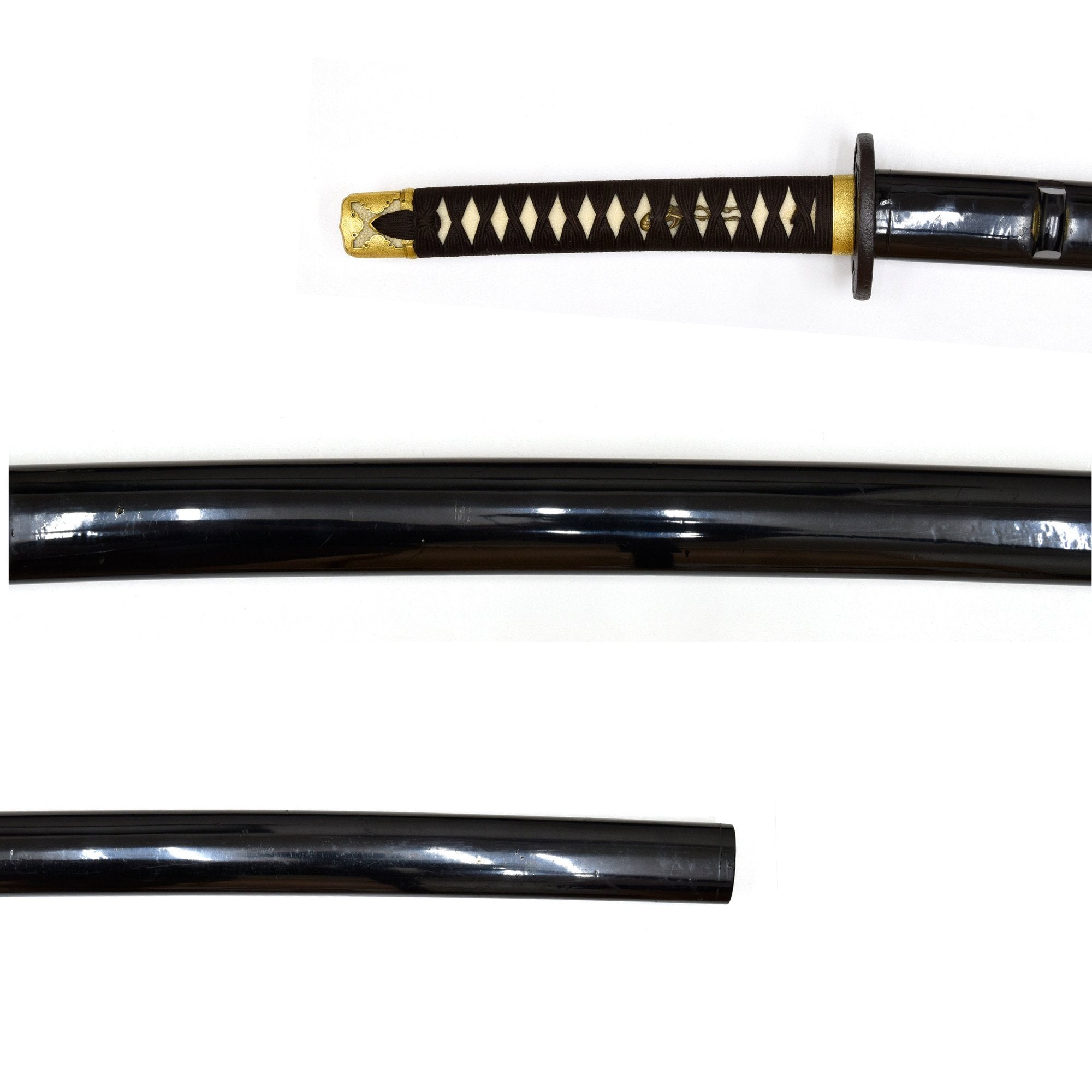
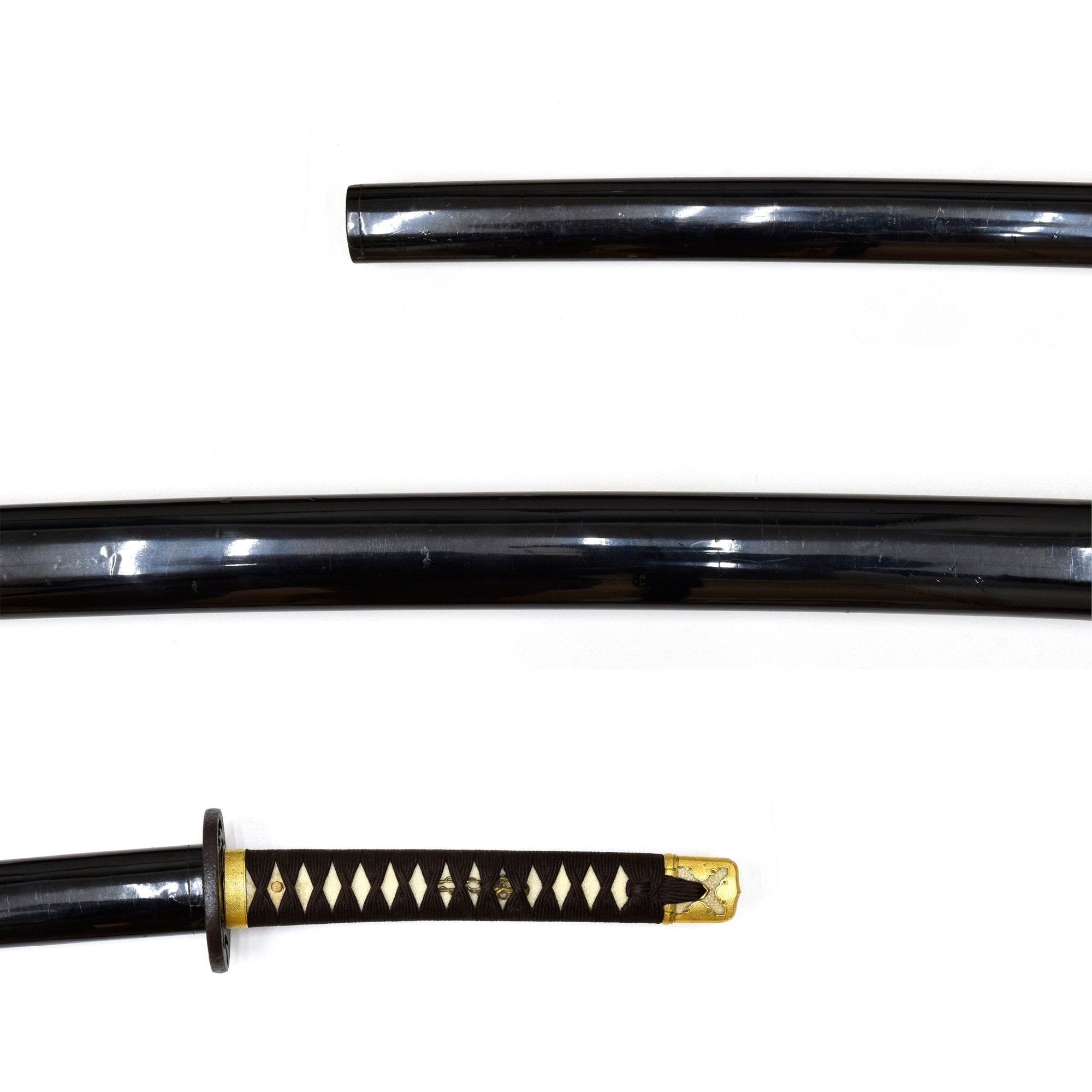
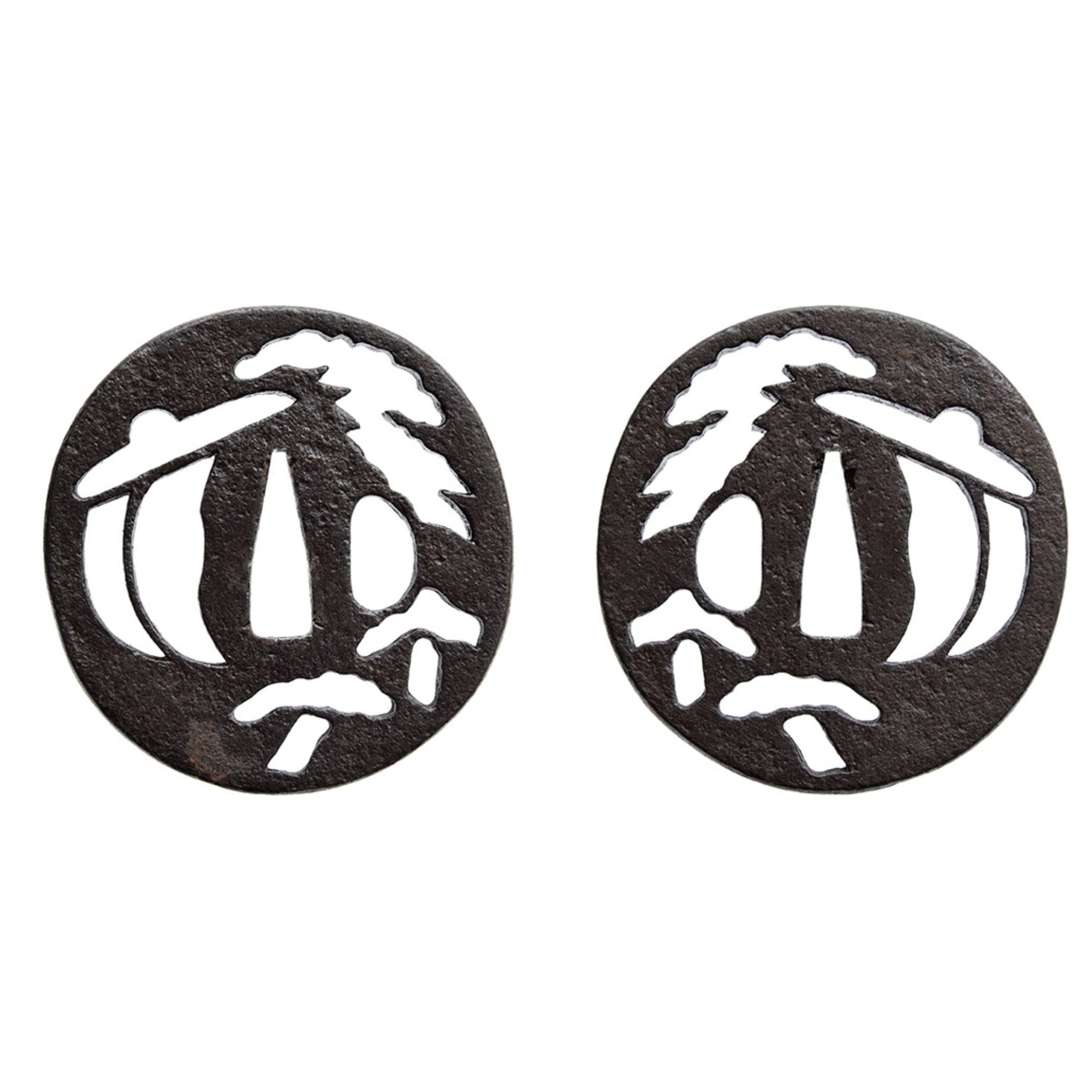
The sword originally had good balance, but the addition of a thick and heavy tsuba to the koshirae shifts the balance further towards the hand, enhancing its handling. The golden fuchi-gashira are also quite striking. Those who have the means are encouraged to have the sword re-polished or cosmetically retouched to fully enjoy Yukinaga's refined steel.
Bare weight: 870 grams.
Weight with koshirae and without saya: 1,195 grams.
Nihontō Information
| Name 名称 | 豊後高田住藤原行長 - Bungo Takada ju Fujiwara Yukinaga |
| Blade Length 刀長 | 二尺三寸二分三厘弱 / 70.4 cm |
| Sori 反り | 四分二厘強 / 1.3 cm |
| Blade Width 元幅 | 34.9 mm |
| Blade Thickness 元重 | 7.1 mm |
| Tip Width 先幅 | 物打24.5 mm 横手位置22.3 mm |
| Tip Thickness 先重 | 物打6.2 mm 松葉位置5.6 mm |
| Mekugi-ana 目釘穴 | 1個 |
| Age 時代 | 江戸前期 - The early period of Edo era - 17th century |
| Certificate 鑑定書 | 特別保存刀剣鑑定書(NBTHK TOKUBETSU HOZON TŌKEN Certificate) |
| Registration 登録 | 昭和60年6月19日 (June 19, 1985) 静岡県登録 (Shizuoka Prefecture Registration) |
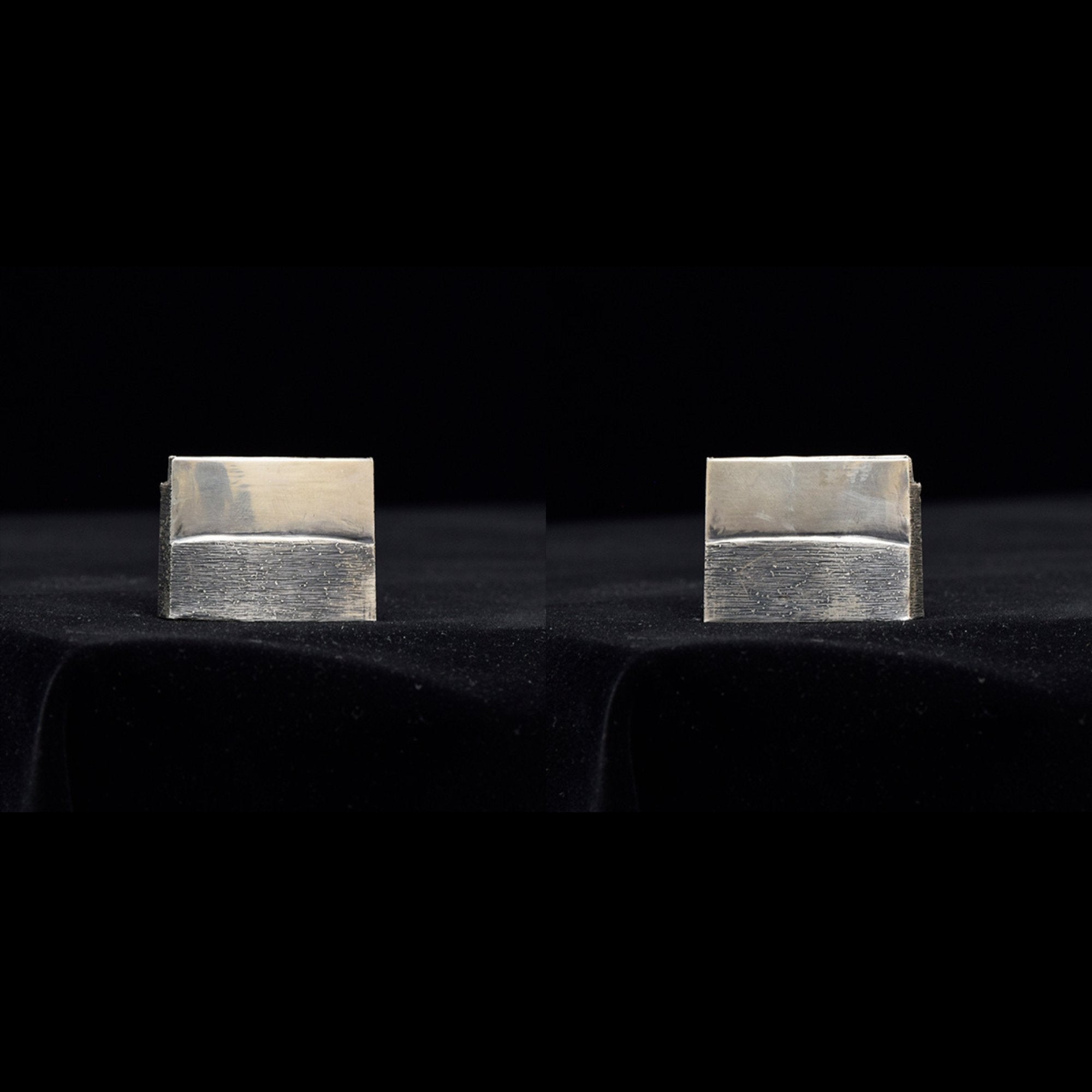
| Included 附属 | 素銅地銀着二重はばき (Copper habaki with silver plating) |
| 黒蝋塗鞘打刀拵 (Kuro-urushi nuri saya uchigatana koshirae / Black lacquered scabbard with fittings) | |


Shopping with Us (Read Before Purchase)
Estimate shipping